#KnowYourInvasives Species of July 2024: European Green Crab

This month, NAISMA is spotlighting a notorious invader – the European Green Crab (Carcinus maenas). Known for its voracious appetite and ability to disrupt delicate ecosystems, this invasive species has made its mark along coastlines worldwide, including in North America.

Identification:
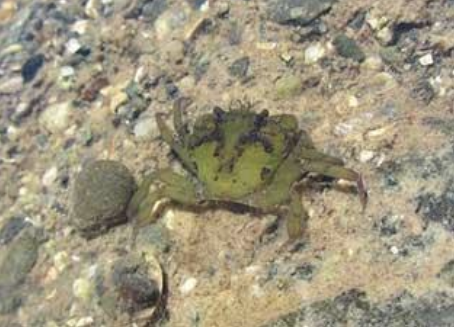
European Green Crab

The European Green Crab can be identified by its distinctive green-to-olive coloration with occasional purple markings. Adults typically measure around 3-4 inches wide. They have five spines on each side of their carapace. With their distinctive claw shape, resembling a mitten, the European Green Grab has a key characteristic to look out for. Juveniles may exhibit more variability in color and markings but can still be identified by their general crab-like appearance. Therefore, join us as we delve deeper into the world of the European Green Crab this month. Together, let’s empower ourselves with knowledge and action to protect our native ecosystems from the threats posed by invasive species. Lastly, help us spread awareness and grow NAISMA’s reach by sharing this article on your social media channels

Photo by Caleb Siemmons

About NAISMA:

The North American Invasive Species Management Association (NAISMA) is a leading organization dedicated to combating the spread of invasive species across North America. Through education, advocacy, and collaboration, NAISMA supports professionals, organizations, and communities in their efforts to manage and prevent the impact of invasive species. With a focus on innovation and partnerships, NAISMA provides resources, training, and expertise to enhance the effectiveness of invasive species management, fostering a healthier, more resilient environment. In conclusion, Contact us for more information.

See our social media posts toolkit to help us spread awareness.

More Articles Like This

Round Leaf Bittersweet: A Twisting Threat to Native Forests

The round leaf bittersweet (Celastrus orbiculatus) is a climbing woody vine that may look harmless — even attractive — but it’s one of the most destructive invasive plants across the eastern and midwestern United States. Native to East Asia, this species was introduced to North America in the 1800s as an ornamental plant. Today, it is choking out native trees and shrubs, threatening forests, and altering entire ecosystems. What Is Round Leaf Bittersweet? Round leaf

New Zealand Mudsnails: Tiny Invaders With a Massive Impact

The New Zealand mudsnail (Potamopyrgus antipodarum) is a small but destructive aquatic invader threatening North America’s freshwater ecosystems. Native to New Zealand, these snails were first detected in the Snake River in Idaho in 1987. Since then, they have spread throughout rivers, streams, and lakes in the western United States and Canada. With no natural predators to keep them in check, their populations can expand quickly and disrupt entire food webs. What Are New Zealand

Spongy Moth: A Persistent Pest With a New Name and Ongoing Impact

The spongy moth (Lymantria dispar), formerly known as the gypsy moth, is one of the most damaging invasive forest pests in North America. Native to Europe, this insect was accidentally introduced to Massachusetts in 1869 by a French naturalist attempting to crossbreed it with silkworms. The moth escaped and, with no natural predators to keep it in check, began spreading rapidly. Today, the spongy moth feeds on the leaves of more than 300 tree and

[wcm_restrict]

Welcome Back.

[/wcm_restrict] [wcm_nonmember]

Welcome.

NAISMA Members direct the future of invasive species management on a continental scale. Not a member yet? Click to join.[/wcm_nonmember]
[wcm_restrict]Access Members Area[/wcm_restrict]

[wcm_nonmember]Login to your account[/wcm_nonmember]