The spotted lanternfly (Lycorma delicatula) may look beautiful with its striking wings and vibrant colors, but don’t be fooled—this invasive pest is wreaking havoc on North American ecosystems. Originally from Asia, the spotted lanternfly was first detected in Pennsylvania in 2014. Since then, it has rapidly spread across multiple states, causing significant damage to trees, crops, and the agriculture and forestry sectors, leading to substantial economic losses.
How to Identify the Spotted Lanternfly
Spotted lanternflies go through several life stages, and each one looks quite different:
- Egg Masses (Fall to Spring): Laid on tree trunks, rocks, or outdoor surfaces, these clusters resemble smears of mud or cracked putty.
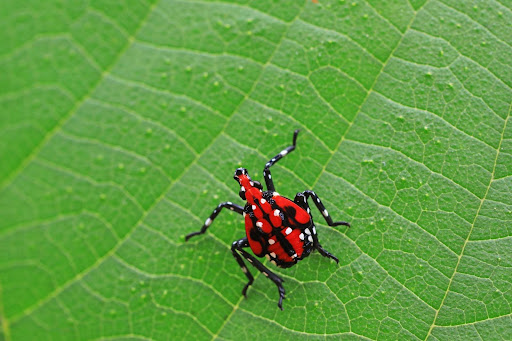
- Nymphs (Spring to Early Summer): The young insects start as black with white spots, eventually developing red patches as they mature.
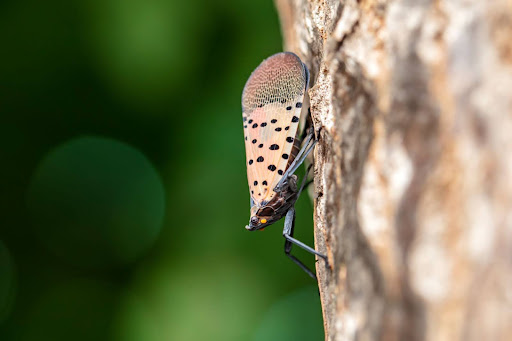
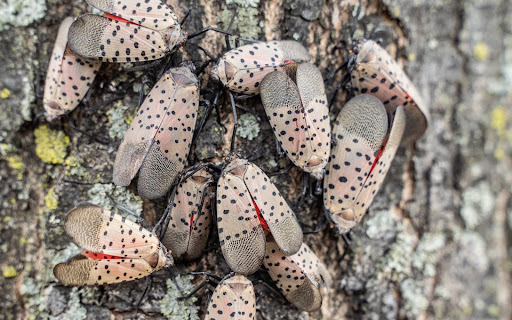
- Adults (Summer to Fall): The fully grown lanternfly is about one inch long, with gray wings marked by black spots. When it spreads its wings, a vivid red underwing is revealed.
If you spot any of these signs, it’s crucial to report them to local agricultural or environmental agencies immediately.


Why Is the Spotted Lanternfly a Problem?
The spotted lanternfly is an incredibly destructive pest that feeds on a wide range of plants, including:
- Fruit trees (apples, peaches, grapes)
- Hardwood trees (maples, black walnut, birch)
- Ornamental plants
- Vines and crops
As it feeds, the spotted lanternfly pierces plants and sucks out sap, weakening the host. This not only stunts growth but also leaves plants vulnerable to disease and secondary infestations.
One of the biggest concerns is its impact on agriculture—particularly on grapevines, which has led to severe losses in vineyards. The pest’s sugary waste, called honeydew, encourages the growth of sooty mold, further damaging crops and trees.
Tree of Heaven: The Spotted Lanternfly’s Preferred Host
One of the primary hosts of the spotted lanternfly is the Tree of Heaven (Ailanthus altissima), an invasive tree species that thrives in disturbed areas, along roadsides, and in urban environments. The tree’s rapid growth and ability to outcompete native vegetation make it an ecological threat in its own right. Because spotted lanternflies are highly attracted to Tree of Heaven, controlling this tree is a key strategy in managing lanternfly populations.
How to Manage Tree of Heaven
- Identification: Tree of Heaven grows quickly, has smooth bark, large compound leaves, and emits a strong, offensive odor when crushed.
- Removal: Cutting down mature trees without proper treatment can cause aggressive resprouting. To effectively remove it, use a combination of herbicides and mechanical removal.
- Herbicide Application: Check with your local Extension Office for more information on the use of herbicides to target Tree of Heaven in your area. Always follow label instructions.
- Monitoring: Continuously check for and remove new sprouts to prevent reestablishment.
How Is the Spotted Lanternfly Spreading?
The spotted lanternfly is an expert hitchhiker—it lays eggs on cars, trucks, outdoor furniture, and even firewood, allowing it to travel great distances undetected. This is how it has spread so quickly across the northeastern and mid-Atlantic United States and why authorities are so focused on stopping its movement.
What Can You Do?
- Check for egg masses and scrape them off surfaces before they hatch.
- Squash nymphs and adults when you see them.
- Report sightings to your local invasive species agency.
- Don’t move firewood or outdoor materials that could contain eggs.
- Encourage natural predators like birds, spiders, and praying mantises, which may help control populations.
- Remove Tree of Heaven to reduce suitable habitat for lanternflies.
The Fight Against the Spotted Lanternfly
Authorities and researchers are working hard to manage the spread of this invasive insect. To curb the population, quarantine zones, public awareness campaigns, and biological controls (such as fungal pathogens and natural predators) are being explored.
The spotted lanternfly is a serious threat, but public awareness and action can slow its spread and protect our environment.Report sightings and take steps to prevent this pest from establishing itself in new areas.
For more information on invasive species and how you can help, visit NAISMA’s Know Your Invasives campaign.