When it comes to aquatic invaders, the golden mussel (Limnoperna fortunei) might be small in size, but it’s already making big waves in the Americas. Native to Asia, this fast-reproducing freshwater bivalve has been threatening ecosystems, infrastructure, and economies since its introduction to South America—and now, it’s officially arrived in the United States.
In 2024, golden mussels were detected for the first time in California’s Sacramento–San Joaquin Delta, one of the most vital and fragile freshwater systems in the western U.S. This alarming discovery has escalated golden mussels to a top-tier species of concern in North America.
What Are Golden Mussels?
Golden mussels are freshwater mollusks native to the rivers and lakes of China and Southeast Asia. They were unintentionally introduced to South America in the 1990s, likely via ballast water discharge in shipping ports. Since then, they have rapidly colonized large portions of the Paraná, Paraguay, and Uruguay River basins, with devastating consequences.
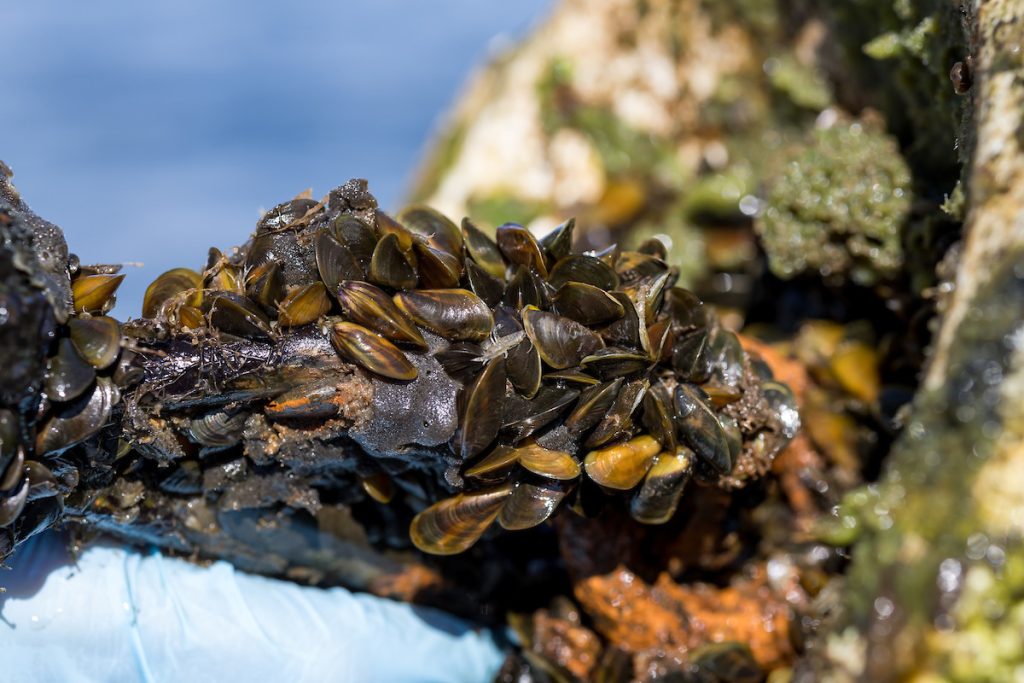
Measuring just 1–2 cm long, golden mussels are filter feeders capable of attaching themselves to nearly any submerged surface using byssal threads—much like the notorious zebra and quagga mussels. Despite their unassuming appearance, golden mussels form dense colonies that clog water infrastructure, displace native species, and alter aquatic food webs.
Where Are They Now—and Where Might They Go Next?
Golden mussels have now reached the United States, with their 2024 detection in California’s Sacramento–San Joaquin Delta and O’Neill Forebay (Merced County). This marks a critical turning point in the North American invasion timeline. The Delta supplies drinking water to over 25 million people, supports critical agriculture, and serves as habitat for numerous native fish and aquatic species already under stress.
Previously, golden mussels had not been recorded in the U.S., though they were considered an imminent threat—especially to warm southern waterways like the Mississippi River Basin and Gulf Coast. Their rapid spread in South America—over 1,200 miles upstream from their original point of introduction—demonstrated how quickly they can colonize major watersheds.
Their larvae (veligers) are microscopic and planktonic, allowing for long-distance dispersal via water flow, ballast water, and potentially through live aquatic trade. The recent California discovery raises concerns about further westward and northward spread, and the potential for long-term establishment across major U.S. water systems.
Why Golden Mussels Are a Problem
Golden mussels impact ecosystems and infrastructure in multiple ways:
- Biofouling: They rapidly colonize intake pipes, water filtration systems, boat hulls, docks,and industrial cooling structures. Their dense colonies cause clogging and reduced efficiency, leading to costly maintenance and downtime for municipalities, industries, and water utilities.
- Biodiversity Loss: These invasive filter feeders outcompete native mussels and other benthic species, smothering habitats and disrupting food webs. As they dominate ecosystems, native species decline—especially those already threatened or endangered.
- Energy Sector Impacts: In Brazil and Argentina, golden mussels have caused millions of dollars in damage to hydroelectric facilities, irrigation systems, and water treatment plants. Their ability to block pipes and corrode infrastructure leads to ongoing operational disruptions.
- Water Quality Changes: As prolific filter feeders, golden mussels alter nutrient cycling and aquatic microbial communities. This affects water clarity, oxygen levels, and overall ecosystem function, which can ripple across entire aquatic food chains.
- Recreational Impacts: Infestations can lead to waterbody closures, mandatory boat inspections, increased launch and entry fees, and restrictions on fishing or shellfish harvesting due to ecosystem degradation or contamination risks. Their sharp shells can also litter shorelines, posing hazards for swimmers and pets.
- Property Value Decline: Waterfront property owners may experience decreased property values due to impaired water quality, increased maintenance needs, and reduced recreational access. Shoreline infestations can diminish the visual and recreational appeal of lakes and rivers.
Cutting-Edge Management Strategies
Managing golden mussels is uniquely challenging due to their rapid spread, high reproductive output, and resilience to conventional control methods. However, researchers and agencies are developing innovative tools and strategies to try to manage this invader, including:
1. Early Detection and Environmental DNA (eDNA)
Monitoring water bodies using eDNA techniques allows scientists to detect golden mussel presence before visible colonization occurs. This early warning system is critical for regions like California that are now facing the early stages of invasion.
2. Genetic Control (CRISPR/Cas9)
Brazilian and international researchers are developing gene-editing technologies to disrupt reproduction in golden mussel populations. Using CRISPR/Cas9, scientists are exploring ways to create a “Trojan” lineage that could collapse populations from within.This promising approach is still in early stages and would require extensive testing and regulatory review before real-world application.
3. Antifouling Coatings and Surface Treatments
Materials scientists are developing new non-toxic coatings that prevent golden mussels from attaching to infrastructure. These include nanomaterials and bio-inspired surfaces that mimic shark skin or lotus leaves to resist biofouling.
4. Biological Control
Researchers are investigating potential natural predators, parasites, and microbial pathogens that could be introduced or encouraged in infested waters—though this carries ecological risks and must be carefully studied to avoid unintended consequences.
5. Quarantine and Trade Restrictions
Strict regulation of ballast water discharge, aquaculture imports, and live organism trade remains the front line of defense. In light of the California detection, these policies are more urgent than ever across western and southern U.S. states.
A Call for Preparedness
The golden mussel is a textbook example of how global trade, hydrologic connectivity, and climate change can accelerate biological invasions. With their confirmed presence in California, the window for prevention is closing fast. If golden mussels follow the path of zebra and quagga mussels, North America could face a multi-billion-dollar economic and ecological crisis.
Prevention, early detection, and innovative management methods are key. Once established, golden mussels are notoriously difficult—if not impossible—to eradicate. Golden mussels can survive in more varied environmental conditions than zebra and quagga mussels, including a wider range of temperatures, salinities, and water quality conditions. Even more of a cause for concern, this adaptability increases their potential to establish in diverse aquatic habitats across North America—including regions that may not have been considered at high risk for other invasive mussels.
What You Can Do
- Learn to identify golden mussels and report any sightings. Take clear, close-up photos using an object to show scale (size) and report it immediately online.
- If you are boating in areas where golden mussels are present, be sure to Clean, Drain, and Dry your watercraft and all equipment. Know before you go and contact the managing agency or waterbody you plan to visit for launching requirements and potential closures.
- Support prevention-focused policies related to ballast water management, aquatic organism trade, and early detection surveillance.
- Stay informed about invasive species threats through networks like NAISMA, state agencies, and research institutions.
Resources