Last week, NAISMA took another important step forward in strengthening our nation’s response to invasive species. Through targeted meetings with Congressional offices, we helped drive legislative discussions on hot topics in invasive species management, reinforced NAISMA’s position as a subject-matter leader, and contributed directly to building momentum for the re-establishment of the Congressional Invasive Species Caucus for a coordinated legislative strategy and public-private coalition.
These strategic Hill visits underscore a larger truth: meaningful, sustained advocacy—especially in the form of caucus engagement and face-to-face conversations with policymakers—is essential to driving progress on invasive species prevention and management.
Why NAISMA Capitol Hill Visits Are So Important
Hill visits are not just symbolic. They’re practical, high-impact advocacy tools that allow organizations like NAISMA to educate policymakers on complex and far-reaching issues, shape legislation by providing recommendations and feedback, and build long-term relationships that lead to more informed and responsive policies.
A highlight of the day was our meeting with Declan Hayes, Legislative Fellow in Rep. Mike Thompson’s (D-CA-4) office. Rep. Thompson, co-chair of the Congressional Invasive Species Caucus, is re-establishing the group following its official 119th registration this past May.
NAISMA was invited to support a “Dear Colleague” letter aimed at recruiting new caucus members—an exciting opportunity to help shape the Caucus’s foundation and ensure it becomes a hub for bipartisan education and action on invasive species issues.
Hayes also embraced NAISMA’s proposal to introduce a congressional resolution declaring the last week of February as National Invasive Species Awareness Week, noting its great potential to raise public awareness and institutional recognition.
In another productive meeting, NAISMA met with Andrew Haring, Legislative Assistant in Rep. Debbie Dingell’s (D-MI-6) office. Rep. Dingell has long championed invasive species policy and is developing new legislation to combat quagga mussel infestations in the Great Lakes—an effort modeled after the region’s successful lamprey control programs. NAISMA will have the opportunity to provide input on the draft bill, helping ensure that the legislation reflects on-the-ground realities and proven practices.
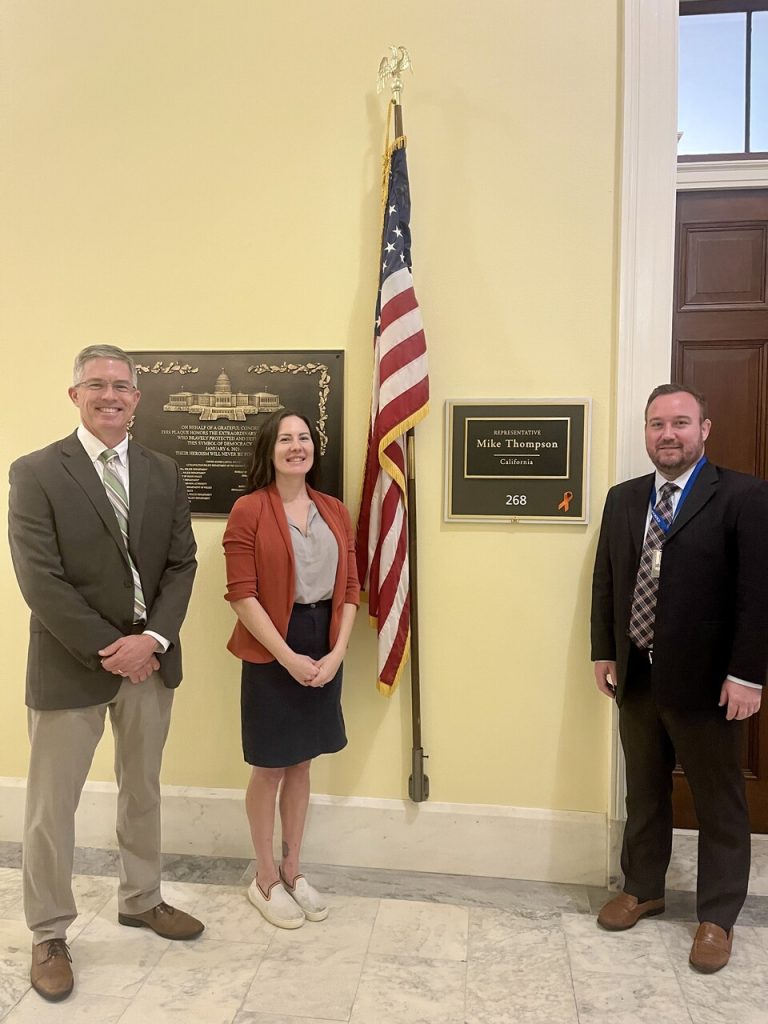
NAISMA also reviewed several bills with both staffers, including:
- Spotted Lanternfly Research and Development Act
- MAWS Act
- National Wildlife Refuge System Invasive Species Strike Team Act of 2025
- GLRI Act of 2025
Each bill represents a targeted bipartisan approach to slowing the spread of invasive species and protecting critical ecosystems and infrastructure, and will likely garner NAISMA’s official support in the coming months.
Looking Ahead: National Momentum is Growing
A broader takeaway from these meetings: interest in invasive species policy is expanding across Congress. Legislative staff signaled that additional proposals may be on the horizon from associated offices, and acknowledged the growing urgency for unified efforts in the fight against invasives. This growing momentum wouldn’t be possible without consistent, informed advocacy and the collaborative spirit of caucuses like the one we’re helping to build.
NAISMA’s Capitol Hill engagement last week reflects our commitment to forging partnerships, influencing policy, and building the infrastructure needed to take invasive species seriously at the national level. Whether it’s helping draft legislation, shaping a national invasive species awareness week, or growing the Congressional Invasive Species Caucus—NAISMA is proud to be at the table and pushing the conversation forward.