The round leaf bittersweet (Celastrus orbiculatus) is a climbing woody vine that may look harmless — even attractive — but it’s one of the most destructive invasive plants across the eastern and midwestern United States. Native to East Asia, this species was introduced to North America in the 1800s as an ornamental plant. Today, it is choking out native trees and shrubs, threatening forests, and altering entire ecosystems.
What Is Round Leaf Bittersweet?
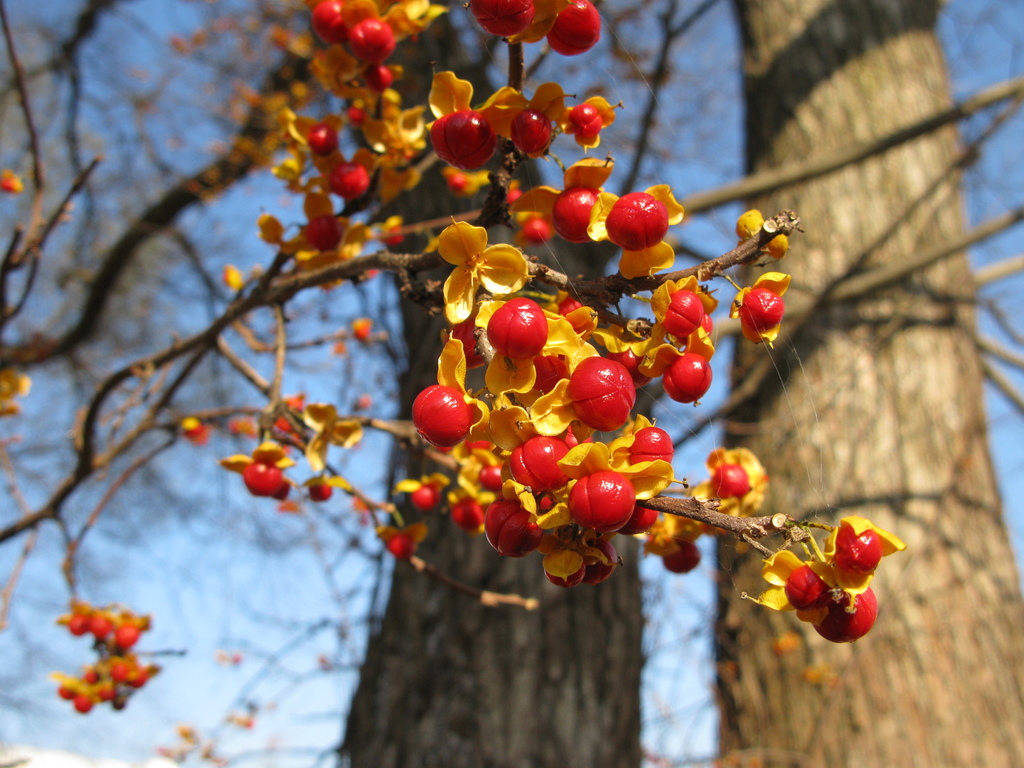
Round leaf bittersweet (also known as Oriental bittersweet) is a deciduous, woody vine that can grow more than 60 feet long. Its stems twine tightly around trees and shrubs, girdling them as they grow. The plant has glossy, rounded leaves that alternate along the stem, small greenish-yellow flowers, and bright red berries encased in yellow capsules that split open in fall. These fruits are often mistaken for the native American bittersweet (Celastrus scandens), leading to accidental spread.
Key Identifier: Round leaf bittersweet’s fruits grow all along the vine and have yellow capsules, while native bittersweet’s fruit clusters appear only at the tips of branches and have orange capsules.
Where Is It Found?
Round leaf bittersweet is now established throughout the eastern half of North America, from Maine to Minnesota and south to Georgia and Texas. It thrives along forest edges, roadsides, and disturbed areas, and can easily invade woodlands and parks. The vine tolerates a wide range of light, soil, and moisture conditions, making it highly adaptable to different habitats.
How Does It Spread?
Round leaf bittersweet spreads through both seed dispersal and root suckering:
- Birds and mammals eat the colorful berries and disperse the seeds through their droppings, introducing the plant to new areas far from the original source.
- Human activity also plays a major role. The plant is still sold in some ornamental trade markets, and its vines are often used in decorative wreaths or floral arrangements. When discarded outdoors, viable seeds can germinate and establish new infestations.
- Vegetative growth allows the plant to resprout from root fragments, making mechanical removal challenging.

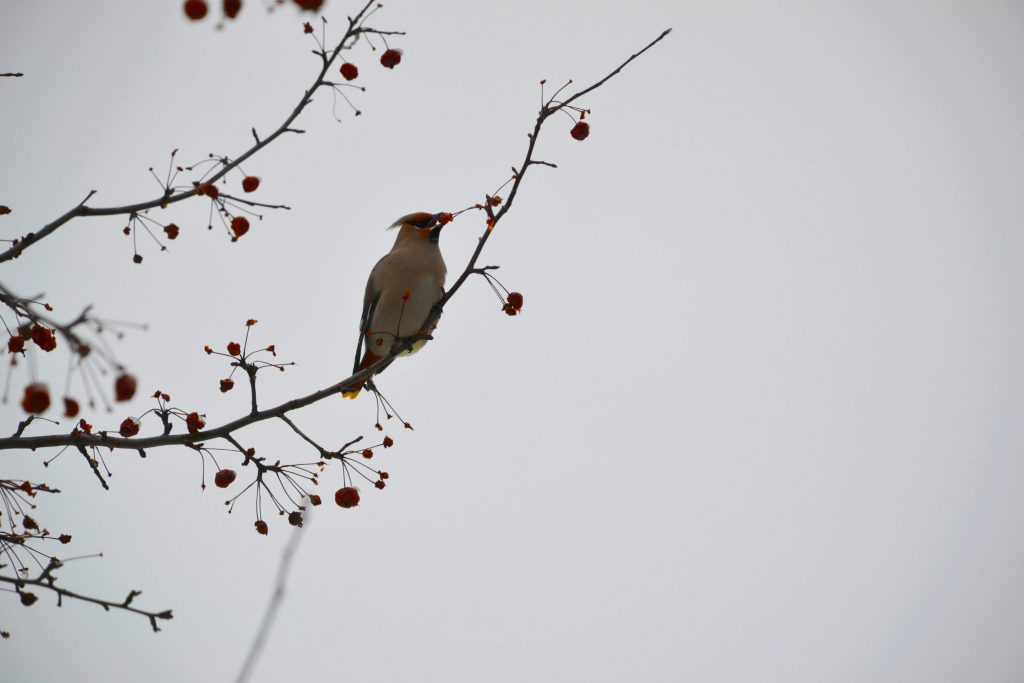
Image Credit (Right): Photo by Chelsey Faucher on Unsplash
Ecological Impacts
Round leaf bittersweet poses a serious threat to forest ecosystems:
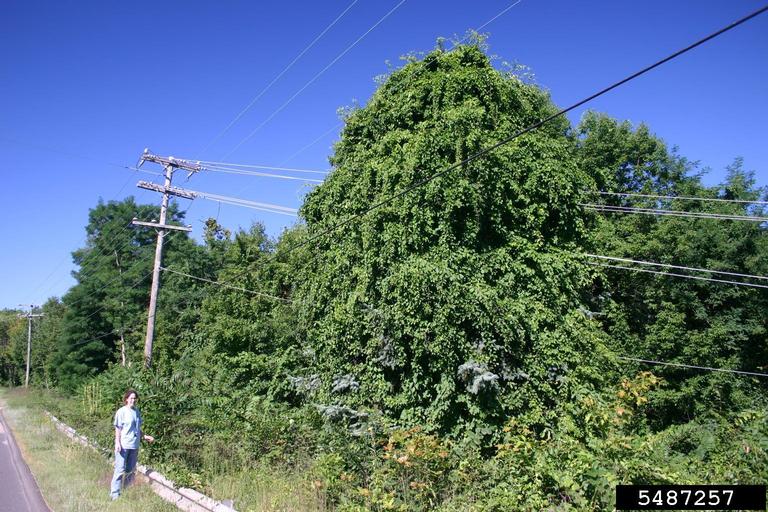
- Smothers and kills trees: Its dense vines climb into tree canopies, blocking sunlight and physically weighing down branches until they break.
- Outcompetes native species: By monopolizing light, nutrients, and water, it displaces native vegetation and alters understory composition.
- Hybridization threat: It can hybridize with native American bittersweet, reducing genetic diversity and threatening the survival of the native species.
- Facilitates other invasions: By opening up canopy gaps and weakening native vegetation, bittersweet creates opportunities for other invasive species to establish.
Management and Control Strategies
Managing round leaf bittersweet requires persistence and a combination of methods:
- Manual removal: Hand-pull small infestations before they fruit, ensuring all root fragments are removed.
- Cut-stump treatment: Cut vines near the ground and immediately apply a systemic herbicide (such as glyphosate or triclopyr) to the cut surface to prevent resprouting. Be sure to follow all label directions and consult your local Extension Office for herbicide guidelines specific to your region.
- Foliar or basal bark treatment: Effective for dense infestations during the growing season, but care must be taken to avoid non-target impacts.
- Prevent seed spread: Bag and dispose of fruiting material in the trash — never compost it.
- Monitor and re-treat: Regular monitoring is essential, as vines often resprout from remaining roots.
Prevention is the most cost-effective strategy. Avoid planting ornamental bittersweet species and opt for native alternatives such as American bittersweet (Celastrus scandens), trumpet honeysuckle (Lonicera sempervirens), or virgin’s bower (Clematis virginiana).
What You Can Do
Everyone can help reduce the spread of this invasive vine:
- Learn to identify round leaf bittersweet and report sightings to your local invasive species council or extension office.
- Avoid using invasive bittersweet vines in decorations or wreaths.
- When hiking or recreating, clean your boots, clothing, and gear before and after exploring forested trails to avoid transporting seeds.
- Participate in local volunteer removal efforts to restore native vegetation.