
Invasive carp, particularly a group of species previously known as Asian carp, have become one of the most significant threats to freshwater ecosystems in North America. These fish, introduced unintentionally and intentionally decades ago, now compete with native species, alter food webs, and pose ecological, economic, and social challenges for resource managers and communities.

What Are Invasive Carp?
The term “invasive carp” in North America generally refers to four non-native species originally from East Asia:
- Silver carp (Hypophthalmichthys molitrix)
- Bighead carp (Hypophthalmichthys nobilis)
- Grass carp (Ctenopharyngodon idella)
- Black carp (Mylopharyngodon piceus)
These species were introduced to the United States in the mid-20th century for aquaculture and as biological controls to manage algae and aquatic vegetation. However, flooding and escapes from containment allowed them to spread into connected waterways, including large parts of the Mississippi River Basin.
In some regions, invasive carp have established very high, persistent populations, while in other areas they may be present at lower densities or still expanding.

Why Are They a Problem?
Invasive carp pose multiple threats to freshwater ecosystems:
- Competition with native species
Silver and bighead carp consume vast amounts of plankton, a foundational food source for many native fish and invertebrates. When invasive carp dominate, they can reduce food availability for native species that rely on plankton during early life stages, such as gizzard shad, juvenile bass, and native mussels. - Rapid reproduction and growth
These carp species grow quickly and reach reproductive maturity early, enabling populations to expand rapidly once established. Their sheer numbers can overwhelm native communities and disrupt ecosystem balance. - Physical hazards
Silver carp are known for their startling behavior of leaping from the water when disturbed by boat motors and noises, which can pose safety risks to boaters and recreational users. - Difficult to remove once established
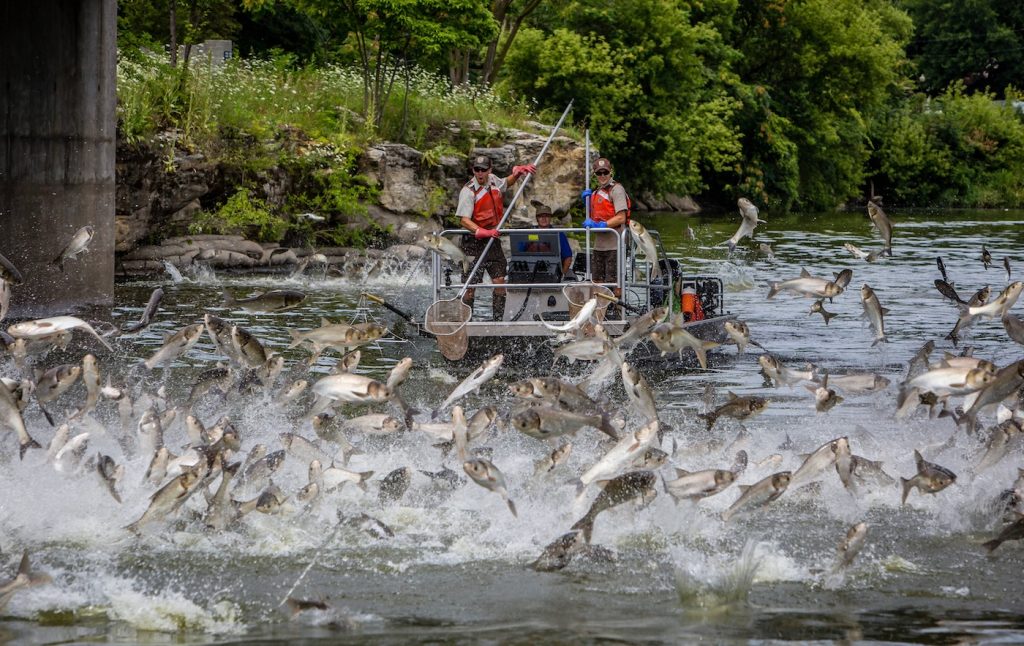
Once invasive carp become widespread in a connected river system, complete eradication is extremely difficult with current tools. Long term control often focuses on reducing numbers and preventing spread into new waters.
Ecological and Economic Impacts
Invasive carp can cause widespread changes to freshwater ecosystems, especially when populations reach high densities.
- They can reshape food webs
Silver and bighead carp feed low on the food chain, competing directly with native fish and other species for plankton. This can ripple upward through the ecosystem by limiting food resources for native fish, including sport fish and forage fish.
- They can reduce native fish recruitment
When invasive carp consume large portions of available plankton, native fish larvae and juveniles may have fewer resources to survive and grow. Over time, this can reduce the number of young fish entering the adult population.
- They can change habitat conditions
Grass carp feed heavily on aquatic vegetation, which can remove critical habitat used by native fish for spawning, feeding, and shelter. Loss of aquatic plants can also affect water clarity and increase shoreline erosion in some systems.
- They create costly challenges for communities and agencies
High carp populations can impact recreational fishing and boating and increase the need for ongoing monitoring and removal. These efforts require long term investment, coordination, and equipment, often across multiple states and agencies.
- The Great Lakes risk remains a major concern
The possible spread of invasive carp into the Great Lakes is one of the biggest drivers of invasive carp research and management in North America. The Great Lakes represent one of the largest freshwater ecosystems in the world, supporting valuable fisheries, coastal economies, and millions of recreational users.

A Critical Front Line: The Chicago Shipping Canal and Great Lakes Connection
One of the most closely watched areas in invasive carp management is the connected waterway system near Chicago, where waterways link the Mississippi River Basin to the Great Lakes.
This connection is often described as one of the last major pathways that could allow invasive carp to reach the Great Lakes. Because of that, it has become a major focus for innovative prevention strategies aimed at keeping carp out of uninvaded waters.
Management efforts in this region include a mix of tools designed to deter fish movement and support rapid response, such as:
- Electric barriers
- Sound and vibration deterrents (including acoustic systems)
- Bubble curtains
- Water cannons
- Enhanced monitoring and targeted removal in high risk areas
These layered strategies reflect a broader reality of invasive species management: no single tool is enough on its own, but combining methods can significantly reduce risk.
Current Management & Control Efforts
Managing invasive carp requires a coordinated, long term approach. Common strategies include:
Physical and behavioral barriers
Barriers and deterrent systems are used in key locations to slow or prevent carp from spreading into vulnerable areas. These tools are especially important where waterways connect major watersheds.
Targeted removal and harvest
Removal programs help reduce carp density in heavily infested areas, which can lower ecological impacts and slow spread. Harvest efforts may include contracted netting operations, commercial fishing partnerships, and seasonal removal pushes.
Monitoring and early detection
Agencies monitor waterways using multiple tools, including netting, electrofishing, sonar, and environmental DNA (eDNA) sampling. eDNA testing looks for genetic material that carp leave behind in the water, which can help managers focus monitoring in high risk areas, even when fish are hard to detect at low numbers. While eDNA does not always confirm that live carp are present, it can provide an early warning signal that guides follow up surveys and response efforts.
Encouraging Fishing and Finding Uses for Invasive Carp
In some areas, agencies and partners are also exploring ways to turn invasive carp removal into a community supported effort. This includes encouraging harvest through commercial fishing and promoting public awareness around harvesting carp where it is legal and appropriate.
Some programs have also worked to use harvested carp biomass in productive ways, including:
- Food products for people
- Pet food and animal feed
- Fertilizer and other repurposed products
These efforts do not replace prevention, but they can support population control, reduce waste, and help build public awareness about the invasive carp problem.
What You Can Do
Managers, anglers, and recreational users can help by:
- Learning to identify invasive carp and reporting suspected sightings to local resource agencies
- Cleaning boats, trailers, and gear to prevent the spread of aquatic invasive species between waterbodies
- Supporting invasive species prevention programs and local monitoring efforts
- Participating in community events or outreach related to invasive carp management
Early detection, consistent management, and coordinated action are vital to slowing the spread of invasive carp and protecting native biodiversity.
Invasive carp serve as a critical reminder that unintended introductions can have far-reaching consequences for ecosystems and the communities that depend on them. Through ongoing research, prevention, management innovation, and community engagement, resource professionals continue to work toward solutions that protect the integrity of North America’s waterways.
Resources:
- Invasive Carp Open Data Hub (USGS): a platform for exploring and accessing USGS data, tools, applications, and publications related to invasive carp research and management.