The spiny waterflea (Bythotrephes longimanus) is an invasive aquatic species posing a serious threat to freshwater ecosystems across North America. Originally from Eurasia, it was first discovered in the Great Lakes in the 1980s and has since spread to numerous inland lakes and reservoirs, carried primarily by recreational water users.
In this post, we’ll explore how to identify spiny waterfleas, the ecological damage they cause, and—most importantly—how to prevent their spread.
Identifying Spiny Waterfleas
Recognizing spiny waterfleas is essential for early detection and prevention. Here’s what to look for:
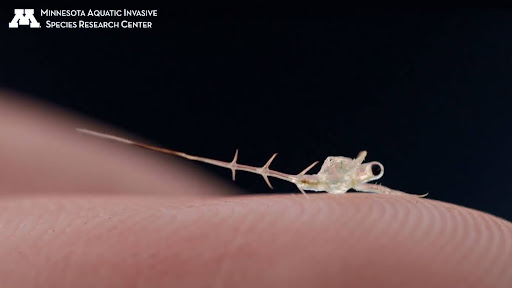
- Size: Spiny waterfleas are tiny, typically around 1 centimeter (0.4 inches) in length.
- Body Structure: They have a distinctive long, spiny tail that accounts for 70% of their body length, which acts as a deterrent to small fish that may prey on them.
- Color: They are generally transparent with a slight tint, making them hard to spot in the water.
- Movement: Spiny waterfleas move in a jerky, erratic manner, often forming visible clusters in infested waters.
You might encounter them clinging to fishing lines or downrigger cables, appearing as gelatinous globs.
Ecological Impact
The spread of spiny waterfleas has had a significant impact on native ecosystems:
- Disrupting Food Chains: Spiny waterfleas consume large amounts of zooplankton, including species vital to the diet of native fish like young perch and walleye. This reduces the food available to native fish populations, resulting in cascading impacts on aquatic ecosystems.
- Competition with Native Species: Native zooplankton species face increased competition, leading to population declines.
- Reduced Water Quality: By altering the zooplankton community, spiny waterfleas indirectly affect water quality, as zooplankton play a role in controlling algae growth.
- Economic Consequences: Infestations can impact commercial and recreational fisheries by reducing fish populations, harming local economies that rely on these industries.

Prevention: Clean, Drain, Dry—and Wipe!
Once introduced, spiny waterfleas are nearly impossible to remove from large water bodies. That’s why prevention is the best and only practical defense.
To reduce the risk of spreading spiny waterfleas to uninfested lakes and rivers, follow these critical steps:
- Drain All Water
Start by completely draining water from your boat and equipment, including the bilge, livewell, and bait buckets. - Wipe It Down
After draining, use a towel to wipe:- Fishing lines and reels
- Drained livewells
- Drained bait buckets
Spiny waterflea eggs can survive out of water, especially in damp environments. Wiping down your gear ensures you’re not giving them a ride to new waters.
What You Can Do
Protecting North American waters from spiny waterfleas starts with responsible actions:
- Learn to recognize spiny waterfleas and how to report sightings to your local invasive species or natural resources agency.
- Follow your region’s regulations for cleaning and transporting boats and equipment.
- Get involved in local prevention programs and encourage others to take action..
By staying vigilant and following a few simple steps, we can protect the health of our lakes and rivers from this damaging invader. Learn more by visiting: stopspiny.org.
Help support our invasive species education efforts today by becoming a NAISMA member!