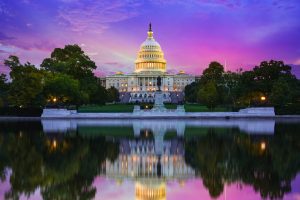
On July 4, 2025, Congress passed H.R. 1, nicknamed the “One Big Beautiful Bill” (OBBB) by its proponents, to become Public Law 119-21. To accomplish its budget goals, major conservation and forest resilience investments made under the Inflation Reduction Act (IRA) of 2022 have been lost. Forest health initiatives are some of the hardest-hit areas, along with rollbacks to administrative capacity that is key to program effectiveness and longevity. The indirect result will be reduced prevention and eradication resources for the invasive species management efforts associated with these initiatives.
What Was Cut: Key IRA Environmental Investments Slashed by OBBB
OBBB rescinds billions in unobligated (not-yet-spent) IRA funding—resources that were intended for long-term forest resilience, restoration, and climate adaptation projects. Among the biggest cuts are funds that directly and indirectly impact invasive species work:
$100 Million for NEPA Environmental Reviews (Forest Service)
Environmental reviews under the National Environmental Policy Act (NEPA) are essential for many public lands projects, especially those aimed at invasive species treatment, prescribed burns, or forest thinning.
$50 Million for Old-Growth Forest Protection and Inventory
Old-growth and mature forests are often biodiversity hotspots and provide irreplaceable ecosystem services. They’re also highly vulnerable to pests like the emerald ash borer or sudden oak death. Funding to identify, protect, and manage these forests has now been rolled back—leaving them more exposed to invasive threats.
$750 Million Slashed from Forest Resilience and Equity Programs
Four different competitive grant programs under the Cooperative Forestry Assistance Act lost a combined $750 million. These programs are designed to:
- Help underserved forest landowners implement climate-smart practices
- Facilitate entry into carbon markets
- Support small-acreage landowners (under 2,500 acres)
- Fund measurable increases in carbon sequestration through forest management
Many of these practices (like removing invasive undergrowth, replanting with native species, and thinning overgrown forests) also directly help control invasive species spread.
$1.5 Billion Removed from the Urban and Community Forestry Program
This program funded tree planting, canopy restoration, and pest management in urban settings—where invasive species like the Asian longhorned beetle and spotted lanternfly have been especially damaging.
$100 Million Cut for Forest Service Administrative Capacity
This was money earmarked to help agencies hire and retain staff to administer IRA-funded projects.
Additional Funding Cuts:
- $250 million for conservation and resiliency projects on Bureau of Land Management (BLM) and National Park Service lands
- $250 million for ecosystem and habitat restoration projects
- $500 million for hiring National Park Service staff
Each of these investments supported restoration work that helps slow or reverse invasive species spread—whether through trail closures, native planting, or fire-adapted forest restoration. Their removal severely limits the federal government’s ability to take proactive action on a growing threat to health, infrastructure, and agriculture.
Feral Swine Program Gets Boost via Farm Bill
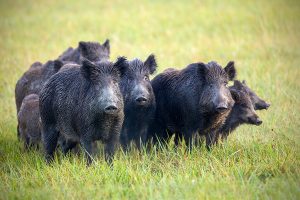
OBBB did allocate $105,000,000 to the Feral Swine Eradication Program originally prescribed in the 2018 Farm Bill, which is currently active under extension through September 30 of this year.
Why This Matters
Invasive species are an immediate and growing threat to our economy and some can impact human health directly. They harm native ecosystems, reduce biodiversity, undermine climate resilience, and harm agriculture and public infrastructure. Invasive species management is integral to natural resource conservation, forest health protection, and promoting ecosystem resilience. Invasive species cross jurisdictional boundaries and so must prevention and control efforts. Gaps in coverage and disruptions in programs can allow invasive populations to spread, potentially reversing years of success.