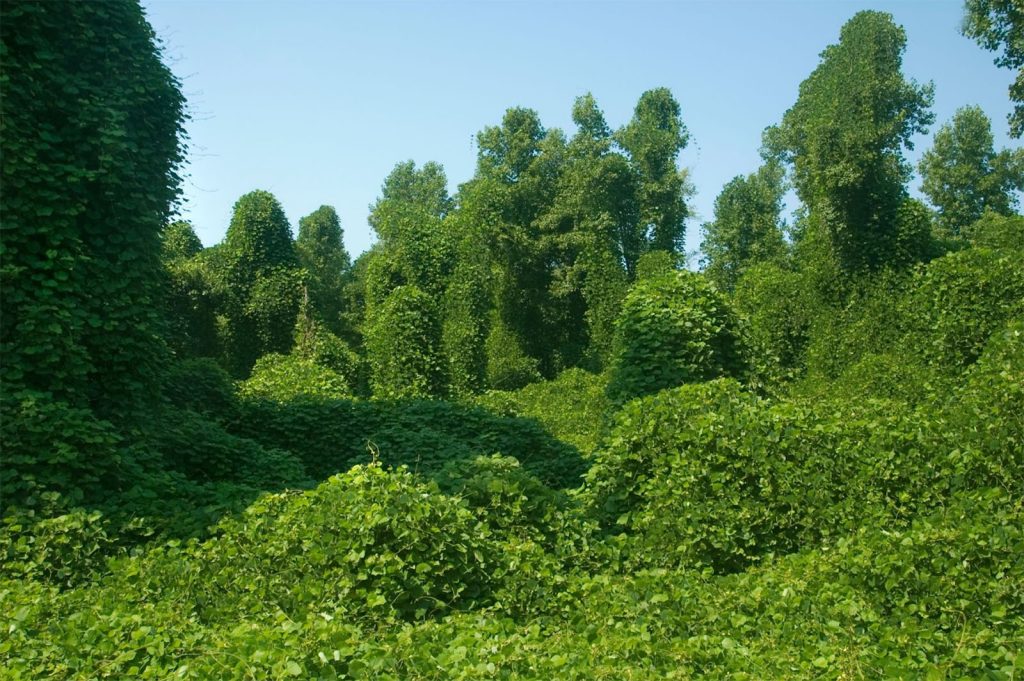
If you’ve ever driven through the southeastern United States, you’ve likely seen it: thick green vines draping over trees, powerlines, fences, and even abandoned buildings. This fast-growing plant is kudzu (Pueraria montana), often called “the vine that ate the South.”
Introduced from Asia in the late 1800s, kudzu was once promoted for erosion control and livestock forage. Today, it is one of the most notorious invasive species in the United States. Its rapid spread and resilience make it a serious ecological and economic threat.
How Kudzu Impacts Ecosystems
Kudzu grows at astonishing speeds, up to one foot per day in peak season, smothering anything in its path.
- Tree and plant death: Kudzu blankets forests, blocking sunlight and suffocating native plants and trees.
- Biodiversity loss: As native plants die, so do the habitats that wildlife depend on. Forest ecosystems become simplified, reducing resilience.
- Soil changes: Kudzu alters soil chemistry, increasing nitrogen levels in ways that disrupt native plant communities.
The result is a dramatic shift in landscapes — forests transformed into monocultures of vine.
The Economic Impact of Kudzu
Kudzu is not just an ecological issue; it’s also an expensive one.
- Utility costs: Power companies spend millions each year clearing kudzu from powerlines and infrastructure.
- Timber losses: The forestry industry suffers as kudzu kills or damages valuable trees, reducing harvestable timber.
- Property damage: Kudzu can overwhelm fences, roadsides, and even buildings, driving up maintenance costs.
- National estimates: The U.S. spends an estimated $500 million annually on kudzu control and damage repair.
For many southern states, kudzu is both a nuisance and a major economic drain.
Management Strategies
Controlling kudzu is challenging, but not impossible. Effective management often requires a combination of methods applied over many years:
- Mechanical Control
- Repeated mowing or cutting can gradually exhaust kudzu’s extensive root system. Roots can grow more than 7 feet deep and weigh over 200 pounds, which is why persistence is critical for long-term success. Goats and other livestock are sometimes used as a natural mowing system too.
- Chemical Control
- Herbicides can suppress kudzu when applied carefully over several years. Because of the plant’s deep roots and ability to resprout, multiple treatments are usually required. Be sure to follow all label directions and consult your local Extension Office for herbicide guidelines specific to your region.
- Herbicides can suppress kudzu when applied carefully over several years. Because of the plant’s deep roots and ability to resprout, multiple treatments are usually required. Be sure to follow all label directions and consult your local Extension Office for herbicide guidelines specific to your region.
- Biological Control
- Researchers are exploring natural enemies from kudzu’s native range, though no large-scale biocontrol solution has been fully implemented yet. The accidentally introduced kudzu bug (Megacopta cribraria) does feed on kudzu but also damages soybeans, complicating its role in management.
- Researchers are exploring natural enemies from kudzu’s native range, though no large-scale biocontrol solution has been fully implemented yet. The accidentally introduced kudzu bug (Megacopta cribraria) does feed on kudzu but also damages soybeans, complicating its role in management.
Rethinking Kudzu: From Pest to Resource?
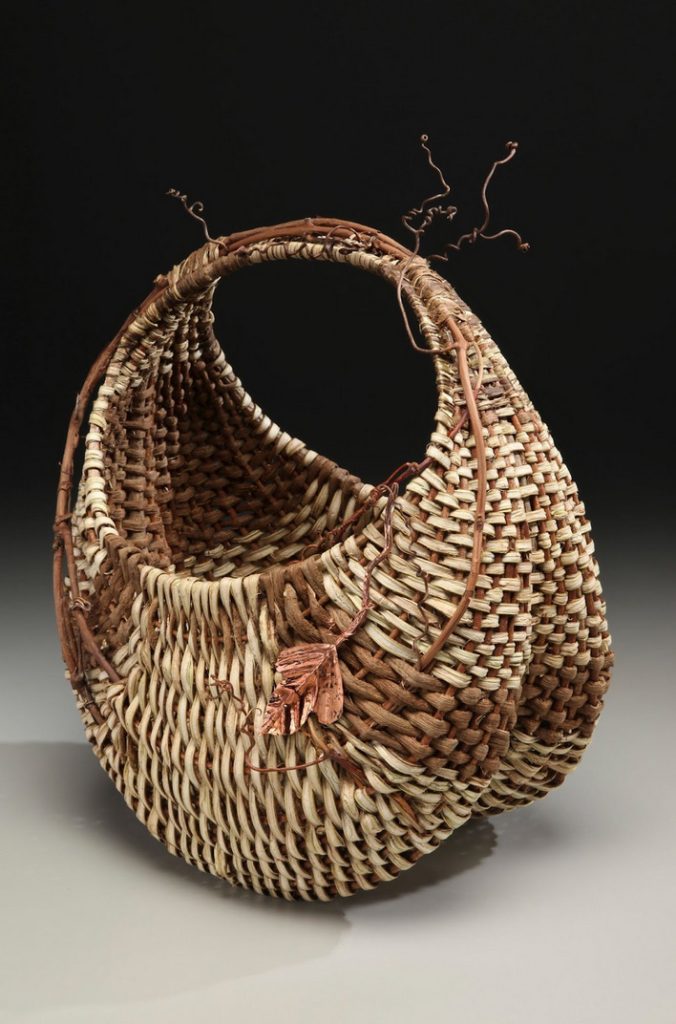
Kudzu is often seen only as a problem, but some communities and innovators are exploring responsible ways to use this plant without encouraging its spread. Kudzu roots and flowers have been used in traditional medicine, while its strong fibers can be woven into cloth, paper, and even baskets. Kudzu vines have long been crafted into durable baskets in parts of the South, blending traditional handcraft with invasive plant management. The plant’s starch has culinary uses, and its foliage can serve as animal fodder.
While these uses won’t solve the ecological challenges kudzu poses, they represent creative ways of working with a plant that has become deeply rooted—both literally and culturally—in the American South.
For a deeper dive into this complicated relationship, Ayurella Horn-Muller’s book Devoured: The Extraordinary Story of Kudzu, the Vine that Ate the South explores how perceptions of kudzu have shifted over time. You can also watch her talk on the book here.
Image Credit: A handmade kudzu basket made in the Appalachian Hen style by basketmaker Matt Tommey (Mjtommey, Wikipedia Commons).
Looking Ahead
Kudzu is a cautionary tale of how well-intentioned introductions can spiral into ecological disasters. What started as a promising soil stabilizer is now a costly invasive species altering entire ecosystems and draining resources.
While managing kudzu is difficult, collaborative efforts from landowners to state agencies can reduce its spread and protect vulnerable landscapes. Supporting invasive species management programs, research, and outreach is essential to staying ahead of the “vine that ate the South.”