
Now in its tenth year, National Invasive Species Awareness Week is a nationwide event occurring in the spring to raise awareness of invasive species and how people can prevent their spread to protect natural ecosystems for future generations.
The upcoming awareness week, which will occur May 16-23, will focus on local action and awareness.
The week’s goal is to connect individuals and public officials with local organizations who offer invasive species removal, restoration, or awareness events and opportunities. We provide digital tools to help organizations connect with their elected officials to see invasive species work being done and to learn what invasive species management involves. Ultimately, we want to create positive outcomes in habitats through education, legislation and local action.
Ultimately, we want to create positive outcomes in habitats through education, legislation and local action.
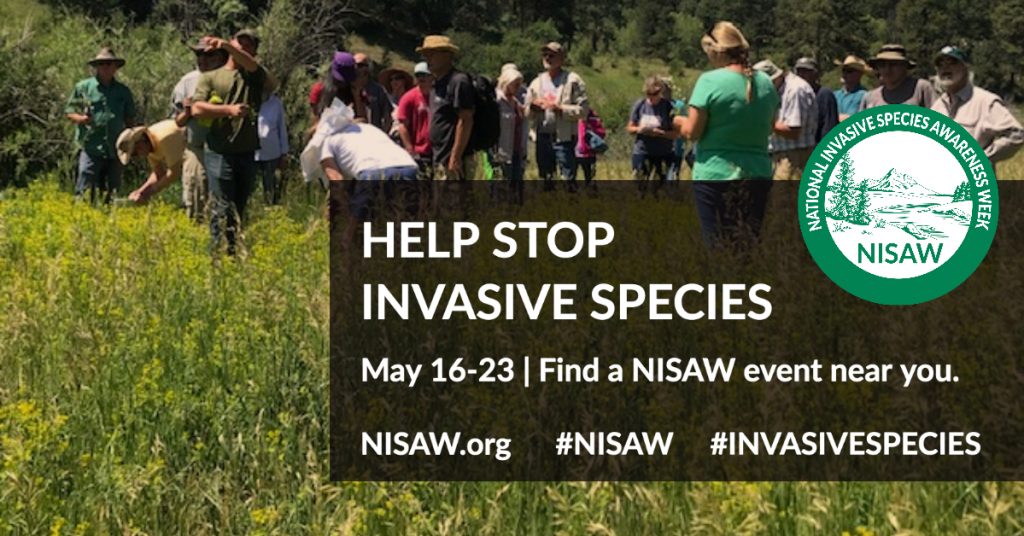
Ultimately, we want to create positive outcomes in habitats through education, legislation and local action.
#NISAW Tweet
How can organizations and agencies participate?
Organizations and individuals are encouraged to join together in projects, events and activities that promote stopping the spread of invasive species — everything personally preventing the spread of invasive species to reporting invasions to authorities.
The creativity local organizers bring to NISAW is what gives this week its energy. We love seeing all the different ways you find to engage your community.
Here are 13 ideas on how to participate in NISAW next month:
- Learn about invasive species, especially those found in your region. Your county extension office and the National Invasive Species Information Center are both trusted resources. Share what you know on social media (use the NISAW social media images to get started).
- Clean hiking boots, waders, boats and trailers, off-road vehicles and other gear to stop invasive species from hitching a ride to a new location.
- Avoid dumping aquariums or live bait into waterways.
- Clean your fishing equipment and don’t dump live bait.
- Don’t move firewood. Instead, buy it where you’ll burn it, or gather on site when permitted.
- Slow the spread of invasive pests by taking extra care when traveling, gardening or moving recently killed plant material.
- Buy forage, hay, mulch and soil that are certified as “weed free.”
- Plant only non-invasive plants in your garden, and remove any known invaders.
- Report new or expanded invasive species outbreaks to authorities. Here is a state-by-state list of contacts.
- Volunteer to help remove invasive species from public lands and natural areas. Find an event near you.
- Ask your representatives at the state, local and national level to support invasive species control efforts.
- If you can’t have field days or your work efforts get cancelled, try these other ideas:
- Online: Host virtual events highlighting invasive species. Try to focus on identifying the species most abundant in this season and how participants can safely prevent their spread.
- At local trails/parks: Post educational signs for self-guided invasive species tours.
- At home: Remove invasive plants in your own backyard, or identify invasives and flag them for later removal. Share what you’re doing with friends and followers via text message and social media. (Don’t forget to use the hashtags #NISAW and #InvasiveSpecies!)
- Online and at home: Engage local officials. Writing letters and op-eds that express your concern about invasive species and ideas to slow their spread is a good place to start.
- Publicize your work (use the NISAW media templates).
Remember: Use the hashtags #NISAW and #InvasiveSpecies
in your publicity during May 16-23!
These ideas are just a start. You can explore our NISAW toolkit to download templates for public service announcements and press releases on invasive species, grab branded images to use in your social media outreach, and more.