

February 25, 2025 @ 12:00 pm – 2:00 pm CST
Join us for an engaging webinar exploring innovative biosecurity efforts led by the United States Geological Survey. Topics include the use of airborne rapid eDNA technology in the Pacific Islands, building effective partnerships to strengthen Pacific biosecurity, evaluating the biosecurity benefits of boot brush stations, and addressing the threats posed by exotic annual grasses to the western drylands. Discover how these cutting-edge initiatives are helping to protect ecosystems across diverse landscapes.
Abstracts & Speakers
Cargo shipments represent one of the primary means for accidental introduction of invasive species to remote islands in the Pacific. Visual inspections can be challenging because of the complexity of different types of cargo and the small size of many invasive species of concern, particularly insects. Environmental DNA (eDNA) is a highly sensitive approach for species detection if an area can be effectively surveyed to collect eDNA, which is challenging in terrestrial settings. Airborne eDNA represents a promising avenue to collect and isolate DNA from cargo areas, and the enclosed nature of a cargo container may allow eDNA to accumulate, even among small invertebrates. We will discuss preliminary work our team has been doing to assess the promise of airborne eDNA for island biosecurity and if successful, how these protocols could be implemented in the future
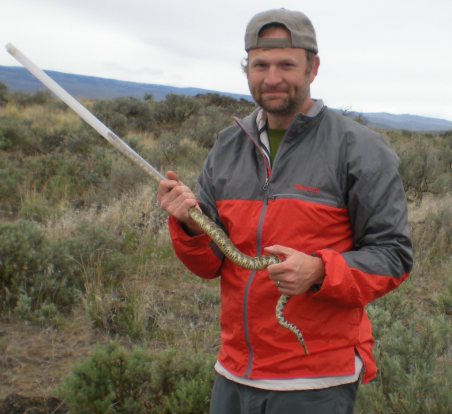
Stephen Spear, Research Biologist, USGS Upper Midwest
Environmental Sciences Center
Stephen began his career as a conservation scientist with the Orianne Society, a reptile and amphibian conservation organization and concurrently as a visiting scientist with the University of Idaho. During this time he worked on landscape genetics of snakes, developed an eDNA monitoring program for eastern hellbender, and initiated a bushmaster conservation program in Costa Rica. After six years at Orianne Society, he worked for four years as Director of Wildlife Ecology at The Wilds, an Association of Zoos and Aquariums institution in eastern Ohio, where he oversaw hellbender and American burying beetle headstarting and reintroduction, conducted site-level ecological studies, and continued his work on eDNA and genomic projects. His USGS research portfolio includes advancing environmental DNA detection and use as an early detection and rapid response tool for management of invasive species.
Developing strong biosecurity measures requires scientific knowledge, standardized processes, partnerships across disciplines, and local leadership. In January 2025, Guam led an on-island Biosecurity Training that served to showcase and advance years of information exchange with local, regional, and national agencies on best practices for managing the flow of invasive species into and off of the island. Guam is a major transportation hub for the Pacific Islands and is key to strengthening the region’s resilience to and preventing the spread of invasive species. This presentation will focus on the roles of the Department of the Interior and USGS in supporting the partnerships and science that supported Guam in hosting its recent Biosecurity Training, and how we can advance timely followup action items and promising outcomes that benefit Guam as well as the neighboring islands in the Pacific region.
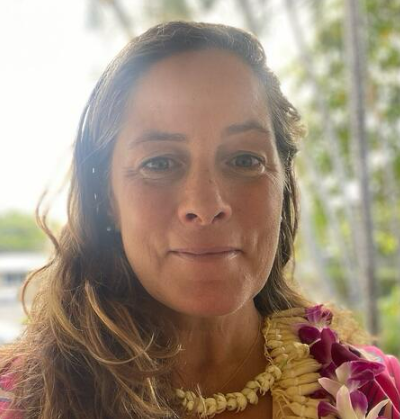
Heather Kerkering, Assistant Regional Administrator for the Pacific Islands Climate Adaptation Science Center
Prior to serving as Assistant Regional Administrator (ARA), Kerkering was the Science Coordinator for the PI CASC. As the ARA, Kerkering facilitates collaborations with USGS scientists and partners across the State of Hawai’i and the U.S. Affiliated Pacific Islands (USAPI) that focus on building resiliency of the Pacific’s fragile island ecosystems, while acknowledging the importance of U.S. government strategic planning across the region. She was a founder of the Pacific RISCC and serves on several related committees, including the National Invasive Species Council. Her work supports the Department of Interior’s Office of Insular Affairs and she represents USGS to events such as the annual Territorial Workshops, Biosecurity Trainings, and the Pacific Ecological Security Conference. Kerkering had the privilege to join the DOI delegation for Our Oceans 2022. Kerkering also oversees dozens of PICASC projects that span a wide range of topics and geographies, carried out by federal and University Principal Investigators and local/regional community partners. Before joining PICASC, Kerkering served as the Director of the Pacific Islands Ocean Observing System (PacIOOS) at the UH Mānoa, She also helped launch the Central and Northern California Ocean Observing System (CenCOOS) at the Monterey Bay Aquarium Research Institute. She co-edited the first book on Coastal Ocean Observing Systems and has participated in numerous regional, national, and international initiatives to improve the collection, coordination, and application of environmental information to improve decision-making.
Biological invasions represent a major threat to natural resource protection and conservation of biodiversity. With greater socioeconomic connections, use of recreation areas, and climate change, the spread of invasive plants is only expected to increase. These biological pressures have led to significant investments in control measures, with particular interest in early detection and rapid response tools. In the last decade, boot brush stations have emerged as a promising tool for limiting introduction and spread of invasive organisms on human footwear in natural areas. In the first part of this presentation, we review existing literature to evaluate what is known about the efficacy of these stations in different environmental, biological, and social contexts and their potential for biosecurity in the United States. In the second part, we highlight efforts from the North American Invasive Species Management Association (NAISMA) to promote a national network of boot brush stations as part of their PlayCleanGo program.

Ian Pearse, Ecologist, Fort Collins Science Center
Ian conducts research at the individual, population, community, and ecosystem level scales. His work focuses on plant-insect interactions and involves work on endangered insects such as bumble bees, strategies to map and control invasive plants, the chemical ecology and behaviors that affect herbivory, and the boom-and-bust seed production dynamics of many trees (i.e. mast seeding). His work informs management decisions made by the US Fish and Wildlife Service, National Parks, and a variety of other groups.
Cheatgrass and other exotic annual grasses have severely impacted vast expanses of semiarid uplands, causing damaging increases in wildfire, loss of native perennials and the habitat they provide, and detracting from grazing, military training, recreation, and other landscape uses. Management responses have ranged from acceptance of the changes; or resisting the changes through fire protection and suppression; or directing the changes to tolerable “alternative” vegetation states, often with mixed success. Key breakthroughs have been made recently in detection, monitoring, and mapping of the invaders and the wildfire risks they pose, and in the toolkits for eradication and restoration. Involvement of USGS scientists in the planning, implementation, and assessment of the treatments had led to substantial advances in the understanding of the fire and invasion problems, enhancement of the tools, and improved security of the fire and invasion threats across vast areas.

Matt Germino, Supervisory Research Ecologist, Forest and Rangeland Ecosystem Science Center
Matt Germino is a supervisory research ecologist that developed and now leads the USGS FIREss team (Fire, Invasives, and Restoration Ecology of Shrub Steppe) of 20 researchers on the invasive-grass and wildfire problem affecting sagebrush rangelands and similar habitats in the western USA. The team provides both basic and actionable science for adaptive management of invasive grass-fire problems, typically co-produced with managers of BLM, FWS, NPS, DOE, DOD, state, and private lands. His work topics such as ecology and control options for cheatgrass and other invaders, wildfire fuels and risk modeling, post-fire recovery. and determining the right restoration seed at the right time and place are described in nearly 200 journal articles over the last 25 years.