
February 24, 2025 @ 1:30 pm – 3:30 pm CST
This webinar will explore emerging threats from invasive marine species, the latest research on coral disease, and innovative approaches to marine biosecurity. Experts will discuss NOAA’s response to invasive soft corals, advancements in diagnosing and mitigating stony coral tissue loss disease (SCTLD), the evolving impact of lionfish populations, and strategies for strengthening marine biosecurity to protect ocean ecosystems.
NOAA’s Response to an Emerging Threat of Invasive Soft Corals in the Pacific and Caribbean Basins – Presented by Dr. Joe Krieger
Recently, several marine invasive species have been identified in the Pacific and Caribbean that could impact mission critical operations for US military, federal and state agencies, and local communities. If these are not addressed and accounted for, there’s a substantial risk that these species could be unintentionally spread to other US regions, potentially causing escalating and compounded economic and ecological damage. In this presentation, I will detail NOAA’s response to this emerging threat and ongoing efforts to prevent the spread and establishment of these marine invasive species.

Joe Krieger, Ph.D., NOAA Invasive Species Coordinator
Dr. Krieger serves as NOAA’s national invasive species coordinator and is duty stationed at NOAA’s Great Lakes Environmental Research Laboratory in Ann Arbor, MI. Joe helps to coordinate NOAA’s invasive species work across the country and to bring awareness to new and emerging threats to NOAA’s managed resources (coral reefs, fish stocks, coastal/ shoreline habitat, etc.).
Molecular characterization and diagnosis of stony coral tissue loss disease (SCTLD) – Presented by Dr. Michael Studivan
Stony coral tissue loss disease (SCTLD) is the most destructive coral disease described to date, and has become endemic in most parts of the Caribbean. The AOML Coral Program is conducting interdisciplinary research to mitigate further impacts of this disease on Caribbean reefs, as well as to prevent the potential spread of SCTLD to Pacific reefs. In this talk, Dr. Michael Studivan will present an overview of the research the AOML Coral Program is conducting to characterize, diagnose, and model SCTLD spread, including implications for management.

Dr. Michael Studivan, Associate Scientist
Dr. Michael Studivan is an Associate Scientist at the University of Miami’s Cooperative Institute for Marine and Atmospheric Studies (CIMAS) and NOAA’s Atlantic Oceanographic and Meteorological Laboratory (AOML), as part of the AOML Coral Program. His research involves the use of advanced molecular techniques to better understand coral diseases and treatments, genetic connectivity of coral ecosystems, and physiology/adaptation of corals in marginal and extreme environments.
Nature, Take the Wheel!: Lionfish Abundance, Impacts, and Control After the Invasion Peak – Presented by Dr. Steve Gittings
Where are lionfish on the timeline of their invasion cycle? In many places they probably reached peak abundance several years ago. How will the post-peak phase play out? What will determine the levels of future impacts? Will the legacy of lionfish impacts be highly destructive on a continual basis, less disruptive at some lower level, or just a memory?

Steve Gittings, Ph.D., Chief Scientist, NOAA Office of National Marine Sanctuaries
Dr. Steve Gittings is a conservation scientist, training and working at Texas A&M University before managing the Flower Garden Banks National Marine Sanctuary, then becoming Chief Scientist for NOAA’s Office of National Marine Sanctuaries in 1997. His specialty is ecosystem characterization and monitoring. He has studied coral reef ecology, invasive species, biofouling, and impacts from ship groundings and oil spills. His team produces reports on resource status and trends in national marine sanctuaries, which are critical elements of management planning. He has been a diver for over 50 years, a scientific diver for over 40 years, has done four saturation missions in the Aquarius habitat, operated ROVs, and is a submarine pilot. He also developed a lionfish trap that he hopes will help control deep populations of this invasive species while supplying lionfish as seafood.
Improving Marine Biosecurity – Presented by Dr. Val Brown
This talk will provide a brief overview of marine biosecurity concepts including prevention, early detection and rapid response, and control and the challenges of addressing invasive species in the marine environment.
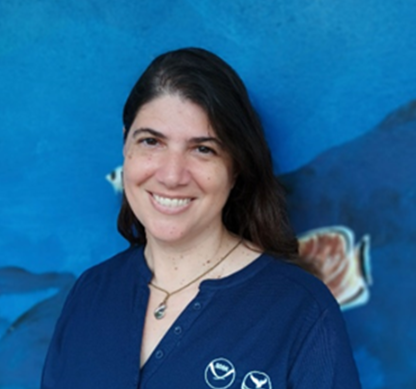
Val Brown, Research Coordinator, NOAA National Marine Sanctuary of American Samoa
Val Brown is one of the leads for the Pacific Preparedness Team of the US Coral Reef Task Force Coral Disease and Disturbance Working Group. She has worked in the Pacific Islands since 2004 on a broad array of issues including regional marine biosecurity. She was part of the teams that developed the strategic implementation plan for the Micronesia and Hawai’i Regional Biosecurity Plan and control efforts for crown of thorns starfish, a nuisance species, in Guam. In her current role as the Research Coordinator for the National Marine Sanctuary of American Samoa, Val leads the conservation science program and efforts to better understand and protect the amazing marine resources in the sanctuary and the ecosystem services they provide to the people of American Samoa.
Horizon Scanning and Risk Assessment – Presented by Rochelle Sturtevant, Ph.D.
This talk will provide an overview of NOAA work in the Great Lakes region to synthesize horizon scanning and risk assessment conducted at scales ranging from local to global, and to scale this information for application to the Great Lakes.
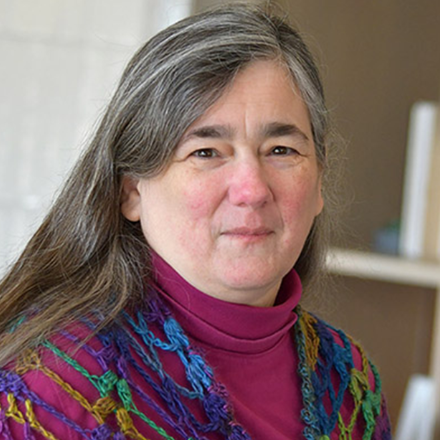
Rochelle Sturtevant, Ph.D., AIS Specialist and Program Manager for the NOAA Great Lakes Aquatic Nonindigenous Species Information System (GLANSIS), Michigan Sea Grant, Michigan University Extension
Dr. Sturtevant has worked with the GLANSIS database since its inception in 2003, first as the Sea Grant Liaison to NOAA-GLERL and later as the GLANSIS Program Manager. This NOAA-led regional searchable database provides researchers, natural resource managers and educators with access to distribution and impact data, risk assessments, and synthesis of the latest research publications. Rochelle’s position allows her to work collaboratively with Michigan Sea Grant, Michigan State University Extension, and the NOAA Great Lakes Environmental Research Laboratory (GLERL) to address regional science information needs and support early detection and rapid response as well as regional coordination. Dr. Sturtevant serves as Sea Grant research representative to the Great Lakes Panel on ANS as well as contributing to the National Invasive Species Council’s Horizon Scanning Task Team and the ANSTF’s Early Detection and Rapid Response Subcommittee.
An overview of Chondria tumulosa in Papahānaumokuākea Marine National Monument and the development of preliminary biosecurity protocols
Chondria tumulosa was first observed and collected in 2016 after it was found in small patches overgrowing coral reefs around the northeastern backreefs of Manawai (Pearl & Hermes Reef) in the Papahānaumokuākea Marine National Monument (PMNM). It was not until a research expedition in 2019 that the seriousness and extent of Chondria reef overgrowth and spread came to light. At that time, preliminary lethality experiments were conducted to inform management of the biosecurity protocols required to mitigate the risk of inadvertently spreading this cryptogenic species elsewhere in the PMNM or inhabited Hawaiian Islands. Further trials were conducted in 2022 to better expand managers’ biosecurity mitigation options after the alga was discovered at the adjacent atoll of Kuaihelani (Midway Atoll) in 2021. In 2023, the species was identified at Hōlanikū (Kure Atoll) growing cryptically and is now considered to be present at the last three atolls of the Hawaiian Archipelago. It is imperative that managers understand the options available to prevent further spread of this species through vectors associated with anthropogenic activities and natural occurrences.
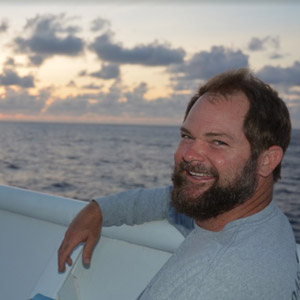
Brian B. Hauk, Sanctuary Resource Specialist, NOAA’s Office of National Marine Sanctuaries-Papahānaumokuākea
Brian Hauk is the Resource Protection Specialist for the Papahānaumokuākea Marine National Monument (PMNM) with NOAA’s Office of National Marine Sanctuaries. Part of his duties are to oversee PMNM’s marine biosecurity protocols for alien species management in the Monument. Prior to his time at NOAA, he worked for Hawaii’s Division of Aquatic Resources utilizing mechanical removal techniques and biocontrol methods to control several invasive red algal species. This background has been very applicable to PMNM’s most recent challenge of managing Chondria tumulosa. Since its discovery, Hauk has been heavily involved in the development of management actions related to the cryptogenic species that is overgrowing pristine coral reefs in the northern most atolls of PMNM.