

December 17, 2025 @ 1:00 pm – 2:30 pm CST
Spotted lanternfly (Lycorma delicatula) and tree-of-heaven (Ailanthus altissima) are closely linked invasive species that continue to threaten North American forests, agriculture, and ecosystems. This webinar will explore promising biocontrol solutions aimed at managing these invasive pests.
- Dr. Hannah Broadley (USDA APHIS): An update on the search for and use of natural enemies to manage spotted lanternfly.
- Dr. Scott Salom (Virginia Tech): An introduction to tree-of-heaven and research on the use of weevils and fungi as biocontrol agents, including their potential for area-wide suppression.
- Dr. Francesca Marini (BBCA): An overview of tree-of-heaven biology and the use of mite biocontrol in a North American context.
Join us to learn about the prospects for integrating multiple agents and the future of managing these invasive species through emerging solutions to one of the most pressing invasive species challenges facing our forests, landscapes, and communities.
Closing in on use of weevils and fungi as allies towards area-wide suppression of tree-of-heaven, a critical host of spotted lanternfly
Presented by Dr. Scott M. Salom, Department of Entomology, Virginia Tech
A host-specific native fungal wilt pathogen is being developed as a bioherbicide for use against tree-of-heaven. It has demonstrated significant efficacy in field trials and its development towards eventual availability in the US is looking like a real possibility. Concurrently, a weevil native to China and host-specific pest of this tree in its native habitat, has been studied extensively in China and in Quarantine in the US. It attacks the tree under the bark and kills trees that are under stress. In the lab the weevil has been shown to readily inoculate the seedlings with the fungus when feeding on the stems. This weevil is close to being approved for release by USDA APHIS. Once both biological control agents are approved, efforts will focus on determining how best to deploy them, alone and together, with the goal of maximizing their efficacy.
An update on evaluations of candidate biological control agents to manage spotted lanternfly populations
Presented by Dr. Hannah Broadley, Supervisory Biological Scientist, USDA APHIS
In this talk, Dr. Broadley will provide an overview of natural enemies of spotted lanternfly, with a focus on parasitoids being evaluated for classical (or importation) biological control. Natural enemies of spotted lanternfly are present both in the native range and invasive ranges of spotted lanternfly and host specific species are being considered and evaluated as candidate biological control agents. In particular, the focus of this work is on parasitoids of spotted lanternfly from the native range of China including the egg parasitoid Anastatus orientalis (Hymenoptera: Eupelmidae) and the nymphal parasitoid Dryinus sinicus (Hymenoptera: Dryinid). Extensive testing determined A. orientalis to have too broad of a host range to warrant further testing. However, from testing to date, D. sinicus appears to be a promising candidate biological agent. This presentation will also include a summary of evaluations of natural enemies of spotted lanternfly in Vietnam, where spotted lanternfly is also native, and South Korea and Japan, which both have invasive populations.
A tiny arthropod, Aculus taihangensis, for the management of the global invader Tree of heaven
Presented by Dr. Francesca Marini, Research Leader, BBCA
Originally from China but recently recorded also outside its native range, Aculus taihangensis is an eriophyid mite species that attacks Tree of heaven. An overview of the potential of A. taihangensis as a biological control agent and its possible contribution to the long-term, effective management of the tree of heaven will be provided. Host range testing with non-target species, either phylogenetically or ecologically related to the Tree of heaven, or economically important, demonstrated the specificity of the mite for the target species. Field observations and impact testing revealed that the mite significantly reduces the biomass and fitness of new sprouts and seedlings. Finally, the presentation will share preliminary results from an ongoing experiment studying the efficacy of combining the mite with a mechanical control method. This method shows promise for including A. taihangensis into an integrated management strategy for the control of Tree of heaven.
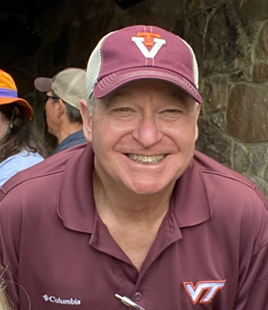
Dr. Scott M. Salom, Department of Entomology, Virginia Tech
Dr. Salom is a Professor of Entomology at Virginia Tech focusing on forest pests. He has 25 years of experience in classical biological control. Much of the focus has been identifying, studying, implementing, and assessing specialist natural enemies of hemlock woolly adelgid and tree-of-heaven. He has been the PI for 32 graduate students, many of whom are professionals throughout and outside the US.
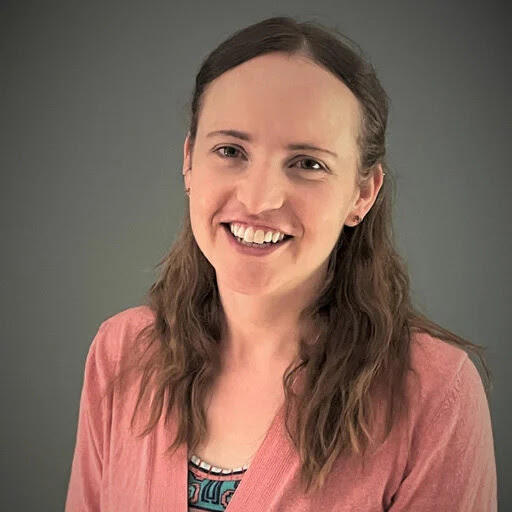
Dr. Hannah Broadley, Supervisory Biological Scientist, USDA APHIS
Dr. Hannah Broadley is a Supervisory Biological Scientist with USDA APHIS Plant Protection and Quarantine, Science & Technology. In her current work, she leads or co-leads several biological control projects, including developing biological control methods for spotted lanternfly, box tree moth, roseau cane scale, cotton jassid, and hemlock wooly adelgid. She earned her doctorate studying the population dynamics and biocontrol of the invasive winter moth. Dr. Broadley’s work includes domestic (invasive range) and international (native range) research and advances innovative, science-based strategies to protect North American ecosystems from some of the most damaging invasive pests.

Dr. Francesca Marini, Research Leader, BBCA
Dr. Francesca Marini is a researcher with over a decade of experience in classical biological control of weeds. As Research Leader at the Biotechnology and Biological Control Agency (BBCA) in Italy, she is responsible for the management and coordination of weed and pest biological control projects, in addition to developing of integrated management strategies. This involves exploring the area of origin of the target species, collecting related biological control organisms, and assessing their specificity and efficacy through laboratory and field host range tests. Her work contributes to the advancement of sustainable approaches for managing invasive species and protecting ecosystems.