

March 19, 2025 @ 1:00 pm – 2:00 pm CDT
Biological control efforts in Canada have a long history of success, with the first programs targeting invasive agricultural pests in the 1930s. Canada’s first weed biocontrol program soon followed, with herbivorous insects from Europe used to control St. John’s wort. In collaboration with British Columbia’s Ministry of Forests, a long-time funder of biocontrol research in Canada, we are now reevaluating Canada’s oldest weed biological programs, to assess their contemporary efficacy (St. John’s wort, spotted knapweed). We will discuss our findings in these old systems before turning to more recent programs that are successfully controlling invasive plants in Canada using agents that have not been available in the US (i.e. houndstongue). We will then highlight study systems that are in the earliest stages of on-the-ground biocontrol in Canada and show promise (i.e. garlic mustard), before discussing new options on the horizon for invasive plants of growing concern (parrot’s feather, Tree of heaven – and its linkage to management efforts for the invasive pest insect, spotted lanternfly). Together, these study systems serve to outline Canada’s long, successful and ongoing biological control programs for invasive plants that are concerns globally.
Speakers:

Dr. David Ensing, Research Scientist with Agriculture and Agri-Food Canada
Dr. David Ensing is a Research Scientist in Vegetation Ecology with Agriculture and Agri-Food Canada in Summerland, BC, Canada. His research interests focus on understanding the evolutionary ecology of species distributions. His research programme at AAFC includes weed biological control, Indigenous food security and sovereignty, rangeland ecology, and vegetation management in managed and unmanaged agro-ecosystems.
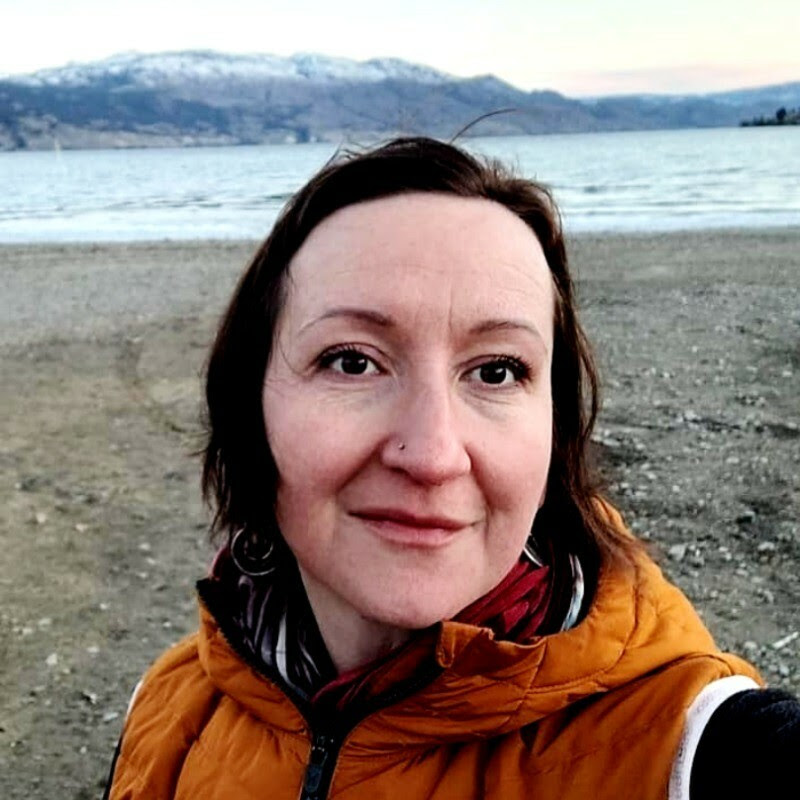
Dr. Chandra Moffat, Research Scientist with Agriculture and Agri-Food Canada
Dr. Chandra Moffat is a Research Scientist in Entomology and Biological Control with Agriculture and Agri-Food Canada. Her team conducts research to develop, evaluate, and improve classical/importation biological control programs for both invasive arthropod and invasive plant species that impact horticulture, rangeland, Indigenous food systems, and natural areas. Her team uses integrative methods in field ecology, natural history, plant and insect taxonomy, and molecular ecology (both DNA barcoding and population genomics) to develop new biological control solutions for invasive species management.