
February 19, 2025 @ 1:00 pm – 2:00 pm CST
The European Green Crab is among the most successful invasive predators in coastal marine ecosystems, with established populations on five continents. While this invasive species has long impacted the Atlantic coast, its more recent arrival on the Pacific coast has resulted in rapid expansion, stretching from California to Alaska. This webinar brings together expert speakers from New Hampshire Sea Grant, Washington Sea Grant, and the Metlakatla Indian Community in Alaska to provide a comprehensive look at the Green Crab’s ecological impacts, monitoring, and management efforts. Join us to explore how communities across both coasts are addressing the challenges posed by this prolific invader.
This webinar is being jointly hosted by NAISMA and Sea Grant.
Speakers:
- Tim Campbell, Wisconsin Sea Grant/USFWS/Sea Grant AIS Liaison
- Gabriela Bradt, New Hampshire Sea Grant
- Emily Grason, Washington Sea Grant
- Ian Hudson, Metlakatla Indian Community
Presentations and Speaker Bios:
The New Hampshire Green Crab Project: Working on solutions to tame an invader – Presented by Dr. Gabriela Bradt
In 2015, in response to local lobstermen seeking assistance in dealing with green crabs in their traps, NH Sea Grant and UNH Cooperative Extension initiated a multi-pronged approach to addressing the problem that included basic biological research, market research and development, and public engagement and education through participatory science. This long-running program has contributed significantly to how the Northeast is approaching green crab mitigation through science, innovation, and public engagement to tame and utilize a resource rather than seeking to eradicate a well-established invader.
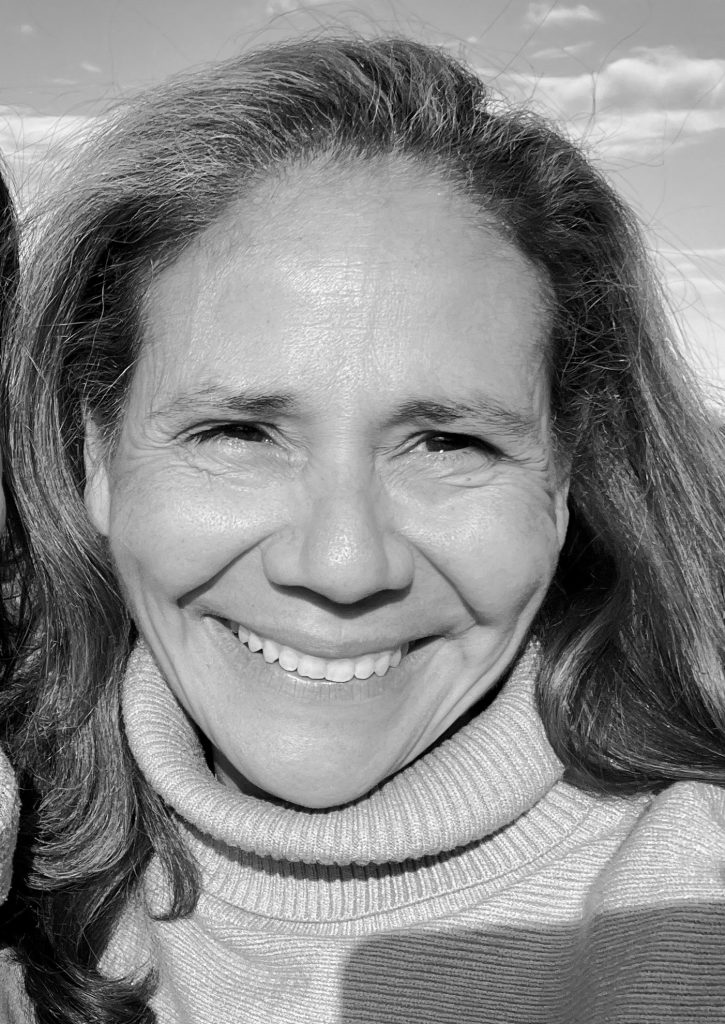
Gabriela Bradt, Ph.D. – New Hampshire Sea Grant
Gabriela is a Fisheries and Aquaculture Extension State Specialist for New Hampshire Sea Grant and the University of New Hampshire Cooperative Extension. Her programming and research is centered around seafood marketing, market creation, and consumer education and awareness about New Hampshire’s fisheries, aquaculture, and local seafood accessibility. Her research on invasive green crabs explores market development for a potential green crab fishery, as well as soft-shell crab production. Additionally, she leads citizen science programs looking at green crab population and distribution in coastal New Hampshire.
Gabriela received a Ph.D. in Zoology from The University of New Hampshire in 2005, and an M.A. in Biology from Bryn Mawr College in 2000. Since 2011 she has been involved in fisheries and aquaculture research and outreach.
A Wide Net and a Deep Bench: Searching and monitoring for European green crab with community members – Presented by Dr. Emily Grason
As green crab threatened to expand their foothold in Washington State in the early 2010s, Washington Sea Grant partnered with Washington Department of Fish and Wildlife to launch a citizen science program for early detection. Community involvement set the stage in Washington not only for successful early detection, but also for extraordinarily broad engagement across partner groups, jurisdictions, and institutions. WSG Crab Team now hosts two participatory science efforts related to green crab monitoring, the flagship monitoring network and a newer more expansive program called Molt Search. Integrated with other components of Crab Team’s support for regional efforts, such as capacity building and research, these programs advance support for, education on, and efficacy of statewide efforts.

Speaker: Emily Grason, Ph.D. – Washington Sea Grant
Emily Grason is a marine ecologist at Washington Sea Grant. As the lead for Crab Team, she oversees a comprehensive program focused on monitoring and control of the European green crab. Starting with a flagship citizen science early detection monitoring network ten years ago, the program has expanded to support Washington’s technical needs related to green crab management, including research and capacity building among managers and trappers.
Emily holds a Ph.D. in Biology from the University of Washington, completed her master’s work at Western Washington University, and her undergraduate work at Bowdoin College. She really enjoys walking in, on, and through Washington’s muddy, salty places, and sometimes remembers to look up for birds.
Managing the First European Green Crab Invasion in Alaska – Presented by Ian Hudson
In 2020, the Metlakatla Department of Fish and Wildlife began monitoring for the invasive European Green Crab. In 2022 the first live EGC specimen was confirmed on Annette Islands Reserve in southern Southeast Alaska, the first one to be discovered in the state of Alaska. Since the confirmation of the first EGC on AIR, the MICDFW has conducted extensive trapping efforts to manage this invasive species.

Speaker: Ian Hudson, Metlakatla Department of Fish and Wildlife
Ian Hudson is a tribal member of the Metlakatla Indian Community and works as the Fisheries Biologist and European Green Crab Coordinator for the Metlakatla Department of Fish and Wildlife since June 2024. Prior to working for MICDFW, Ian worked at Metlakatla High School for the last 10 years, 6 of which he was a science teacher.