
November 19, 2025 @ 1:00 pm – 2:30 pm CST
Join us this November for a dynamic webinar showcasing how artificial intelligence is transforming invasive species detection and monitoring across ecosystems. Through innovative applications like smart traps, drones, and machine learning, researchers and practitioners are unlocking new tools to manage biological invasions more effectively and efficiently.
Dr. Melissa Miller from the University of Florida will present her work on developing AI-powered smart traps designed to detect and remove invasive tegu lizards—large, fast-moving reptiles that threaten native wildlife and agriculture in the southeastern U.S. Dr. Thomas O’Shea-Wheller from the University of Exeter will share his team’s research on using deep learning models to detect invasive hornets in real time, offering critical insights for rapid response and containment. Representing Ducks Unlimited Canada, Matthew Bolding and Mallory Carpenter will discuss their efforts to integrate drone technology and AI to monitor populations of European water chestnut, a fast-spreading aquatic invasive plant impacting wetland biodiversity and water quality.
This webinar will highlight how emerging technologies are being adapted and applied to meet the challenges of invasive species detection in the field—providing a glimpse into the future of smart conservation.
Artificial Intelligence Based Smart Traps Increase Effectiveness and Reduce Resources Compared to Traditional Traps
Presented by Melissa A. Miller
Invasive species management can be limited due to a lack of sustained resources needed to elicit an effective outcome. Live trapping has proven to be an effective means of detection and removal of certain invasive species such as the Argentine black and white tegu (Salvator merianae). However, research has shown that trapping efforts for this species may be most effective when traps are operated for sustained periods of time with high trap saturation in suitable habitats. These requirements pose a challenge for natural resource managers as traditional means of trapping are often labor and time intensive. Yet recent development of an automated smart trapping system, designed by Wild Vision Systems (WVS), that uses artificial intelligence (AI) for capture of tegus holds promise for improving many resource concerns. The WVS smart traps can be fully operated remotely via a software application and the AI software is designed to selectively trap a target species of interest, while excluding capture of bycatch. During May – October 2023, we collaborated with WVS for the first field deployment of smart traps to capture tegus in St. Lucie County, FL where an incipient population has established. Specifically, we conducted a comparison study to evaluate the efficacy of smart traps versus traditional (i.e., non-smart) traps for the capture of invasive tegu lizards. We observed a higher number of tegus captured in smart traps compared to traditional traps, as well as a correspondingly higher CPUE for smart traps. Moreover, use of smart traps resulted in significantly less non-target species captures and reduced labor costs relative to traditional traps. These results indicate that smart traps can have significant advantages over traditional traps regarding selective trapping of target species and reduced bycatch rates, resulting in a reduction of required resources and increased efficacy of invasive species management.
VespAI: Applying Deep Learning to the Detection of Invasive Hornets
Presented by Thomas O’Shea-Wheller
The invasive hornet Vespa velutina nigrithorax is a rapidly proliferating threat to biodiversity and apiculture in Europe, East Asia, and North America. To date, authorities have struggled to contain the hornets, as colonies must be detected and destroyed early in the invasion curve if establishment is to be prevented. Current monitoring approaches rely primarily upon visual alerts by the public and surveillance trapping, however the former yields less than 0.01% accuracy, while the latter kills substantial numbers of native invertebrates. With the continuing spread of V. velutina, there is thus a pressing need to develop improved monitoring technologies within a limited timeframe. In this talk, I outline VespAI, an automated system for the rapid detection and behavioural quantification of V. velutina, V. crabro, and V. orientalis. VespAI leverages a hardware-assisted AI approach, combining a standardised monitoring station with deep YOLO architecture, trained on a bespoke end-to-end pipeline. This enables the system to detect hornets in real-time—achieving a precision-recall score of ≥0.99—and send associated image alerts via a compact remote processor. I discuss the development, performance, and future deployment of the system, and highlight its potential to enhance the scope and sustainability of invasive hornet surveillance at a global scale.
Using RPAS and AI for Improved Management of Aquatic Invasive Species
Presented by Matthew Bolding and Mallory Carpenter
Management of aquatic invasive species is vital to protect at-risk ecosystems and habitat for species at risk, yet managing invasive species like European water chestnut can demand significant time, funding, and staff resources—especially in hard-to-access areas. To help address these challenges, Ducks Unlimited Canada partnered with Saiwa Inc. to develop an innovative, AI-powered surveillance tool that enhances early detection while reducing operational costs. By analyzing imagery captured by Remotely Piloted Aircraft Systems (RPAS), the tool uses machine learning to identify the location of European water chestnut plants and provides GPS coordinates to support targeted management efforts. After successful field testing in 2024, the tool has been integrated into an ongoing invasive species control program and is being adapted to detect other threats, such as invasive water soldier.
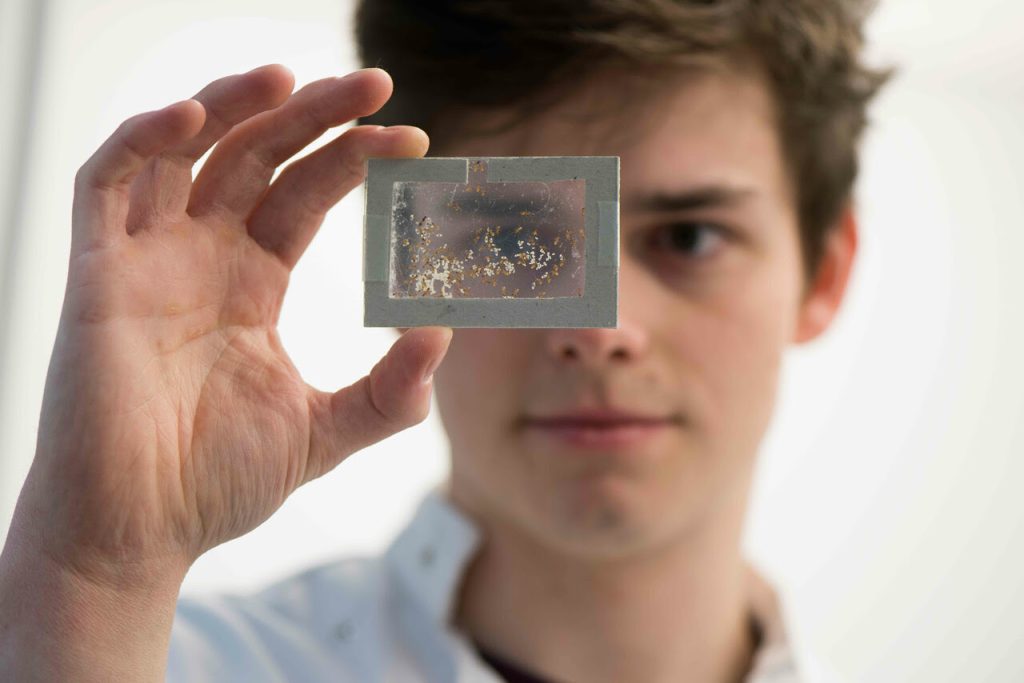
Dr. Thomas O’Shea-Wheller, University of Exeter
Dr. Thomas O’Shea-Wheller is interested in the complex interactions that govern collective behavior, ecology, and self-organization within social insects. As a Research Fellow based at the University of Exeter, he works with ants, bees, hornets, and termites to explore colony network dynamics, social plasticity, and behavioral heterogeneity in invasive contexts. His current research includes projects pertaining to honey bee epidemiology, collective decision-making in ants, and the detection of invasive species using artificial intelligence.
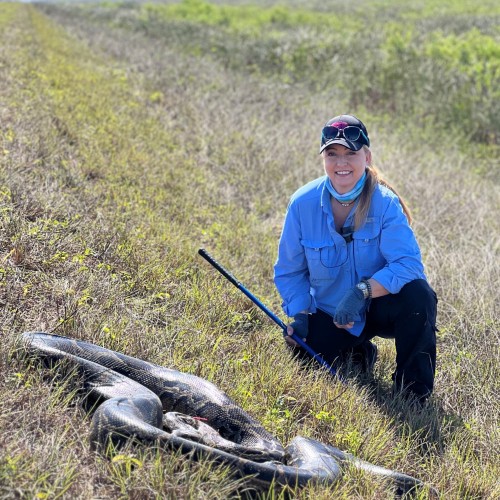
Dr. Melissa Miller, University of Florida
Dr. Miller specializes in invasion ecology with a focus on understanding mechanisms through which biological invasions impact native ecosystems. Through applied and basic research of large invasive reptiles in the Greater Everglades Ecosystem, she addresses ecological and evolutionary questions to further our understanding of invasions and aid natural resource managers in invasive species control efforts.
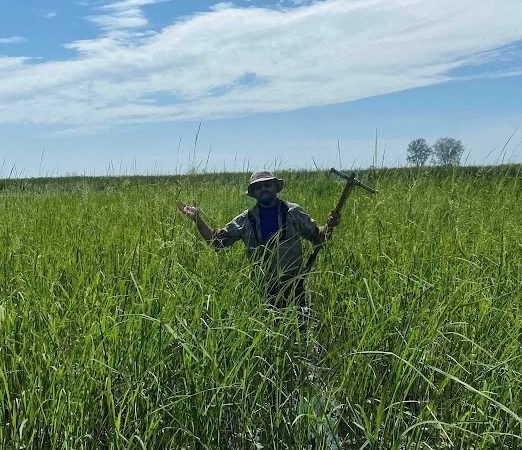
Matthew Bolding, Ducks Unlimited Canada
Matt Bolding leads the Ontario invasive species program at Ducks Unlimited Canada where his team is working to advance drone surveillance tools for aquatic invasive species and supporting the development and implementation of Phragmites biological control. Matt has been working with Phragmites since 2016 and has been involved in monitoring around Phragmites treatment at Long Point, Big Creek and the St. Clair NWA. Matt is currently the Eastern Regional Coordinator for the Ontario Phragmites Action program.
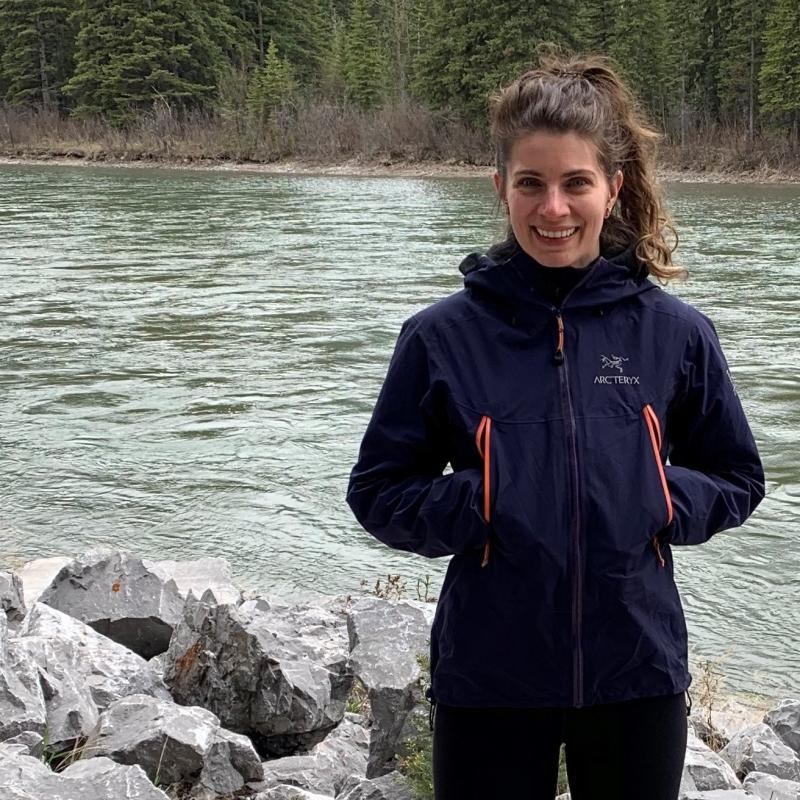
Mallory Carpenter, Ducks Unlimited Canada
Mallory Carpenter is a GIS specialist with Ducks Unlimited Canada. Based in Ottawa, she is part of the team integrating image processing and artificial intelligence techniques to help automate the detection of European water chestnut.