
January 28, 2026 @ 1:00 pm – 2:30 pm CST
This webinar will explore how the words we use to talk about invasive species can either support or undermine effective management. Drawing on insights from the Sea Grant-led Invasive Species Language Workshop hosted during National Invasive Species Awareness Week 2024, speakers will look at message framing, metaphors, and naming conventions that can unintentionally reinforce xenophobia or exclusion, as well as approaches that foster inclusion and collaboration instead.
Presenters will also share early findings from a national survey on invasive species language and common names, highlighting how different audiences perceive current terms and where there is support for change. Participants will come away with a better understanding of why language matters, examples of more inclusive communication practices, and ideas for improving outreach, education, and policy discussions around invasive species.

Tim Campbell, Wisconsin Sea Grant
Tim is the aquatic invasive species program manager for the University of Wisconsin Sea Grant Program and the National AIS Liaison for the NOAA Sea Grant Program. He supports AIS prevention outreach, communications, and program evaluation, and works to apply university and Sea Grant resources to AIS issues. He has been with Wisconsin Sea Grant since 2011.
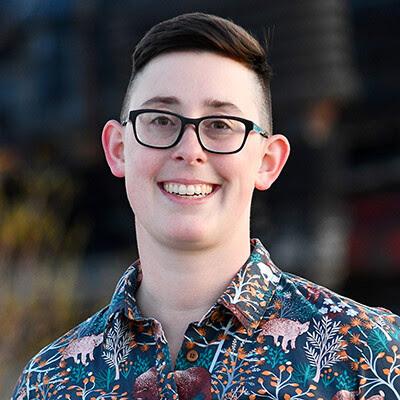
El Lower, Michigan Sea Grant
El Lower works with the Great Lakes Aquatic Nonindigenous Species Information System (GLANSIS), developing and updating species profiles and maps used to track the spread of non-native species throughout the Great Lakes region. El combines experience in stakeholder engagement and science communication to create and promote outreach material on aquatic invasive species and their management efforts at the NOAA Great Lakes Environmental Research Lab (GLERL) in Ann Arbor. When not combing through literature reviews or teaching kids about lampreys at tabling events, El can usually be found out in the woods with a stack of field guides or testing new recipes featuring wild and local ingredients.

Christine Gilbert, PhD, Stony Brook University
Christine is an assistant professor at Stony Brook University in New York with joint appointments in the Department of Communication and the School of Marine and Atmospheric Sciences. Her research focuses on utilizing more effective communication strategies to improve outcomes in scientific and environmental contexts. In collaboration with colleagues, she is currently working on a number of projects focused on understanding perceptions of current invasive species naming conventions and communication strategies, and is applying these findings to a local park in New York City struggling with Phragmites.

Catherine de Rivera, PhD, Portland State University
Dr. Catherine de Rivera is a professor of environmental science and management at Portland State University. An ecologist with more than 25 years of experience, her research examines the spread, impacts, and management of introduced marine species, including long-term work on invasive green crabs. She is particularly interested in how biological invasions intersect with climate change, habitat connectivity, and human activities. More recently, her work has expanded to explore how language and naming conventions shape public perception and management of invasive species. Dr. de Rivera integrates applied research, collaborative working groups, and teaching to advance more effective and inclusive approaches to invasive species science and communication.