

April 16, 2025 @ 1:00 pm – 2:30 pm CDT
Join us for a dynamic webinar featuring expert insights on the spotted lanternfly invasion in North America. Learn about the insect’s biology, cold tolerance thresholds, and the potential for northward expansion. Discover how Washington State is preparing for its arrival with a focus on cultural resource protection, and explore a citizen science initiative preserving lanternfly specimens for future research.
Speakers:
Julie Urban, Penn State University, Amanda Roe, Natural Resources Canada, Jessica La Belle, Washington Invasive Species Council, Michelle Duennes, Saint Vincent College
Timing of female spotted lanternfly reproductive development across its present range in the US presented by Julie Urban
As the spotted lanternfly expands its range in North America, it is encountering temperatures that are potentially beyond the range of those used to date to model its seasonal activity. In warmer regions, we hypothesize that heavy feeding and reproductive maturation are likely to occur earlier than in cooler regions, and that this could translate into greater impact on host plants due to longer, heavier feeding. We also hypothesize that in cooler regions, reproductive maturation is likely to occur later than in warmer regions, and could translate into less impact on host plants due to shorter durations of cumulative feeding. To test these hypotheses, female adult spotted lanternfly were collected from each of four sites across the northern/southern extent of its current US range at multiple time points in the 2024 field season. Results obtained concerning the body mass of collected female adults showed mixed support for our hypotheses, and demonstrate the importance of “ground truthing” model expectations with data from wild SLF populations.
Surprising lower lethal limits of the invasive spotted lanternfly presented by Amanda Roe
Amanda D Roe and Anna J Turbelin
Spotted lanternfly (Lycorma delicatula) is invasive in North America. This species continues to spread beyond its initial infestation site and has established in over 18 states in the eastern USA. Cold winter temperatures are predicted to limit the northern spread of this species, however the cold tolerance and lower thermal limits of this species have not been examined in the North American invaded range. We demonstrate that the egg masses (the overwintering stage of the spotted lanternfly) are surprisingly cold tolerant. We observed hatch after short and long term exposures to temperatures below -20C, well below previously published thermal limits for the species. These results will be critical to inform future risk assessments and distribution modeling for this high risk invasive.
Cultural Impacts of the Spotted Lanternfly in Washington State presented by Jessica La Belle
Spotted lanternfly (Lycorma delicatula) has not yet been detected in Washington State, but Washington is taking a proactive approach and has recently completed the Spotted Lanternfly State Action Plan. This plan is unique in that it addresses the potential impacts of spotted lanternfly on culturally significant ethnobotanicals.
The Spotted Lanternfly Invasion Archive: a citizen science effort to track and study an invasive species presented by Michelle Duennes
This presentation will discuss the Spotted Lanternfly Invasion Archive project, which engages students and community members across several Pennsylvania counties to collect and preserve samples of the invasive spotted lanternfly. The archive supports future research on the species’ spread, adaptation, and evolution. The talk will highlight current progress in building the specimen collection and outline next steps.
Speaker Bios:
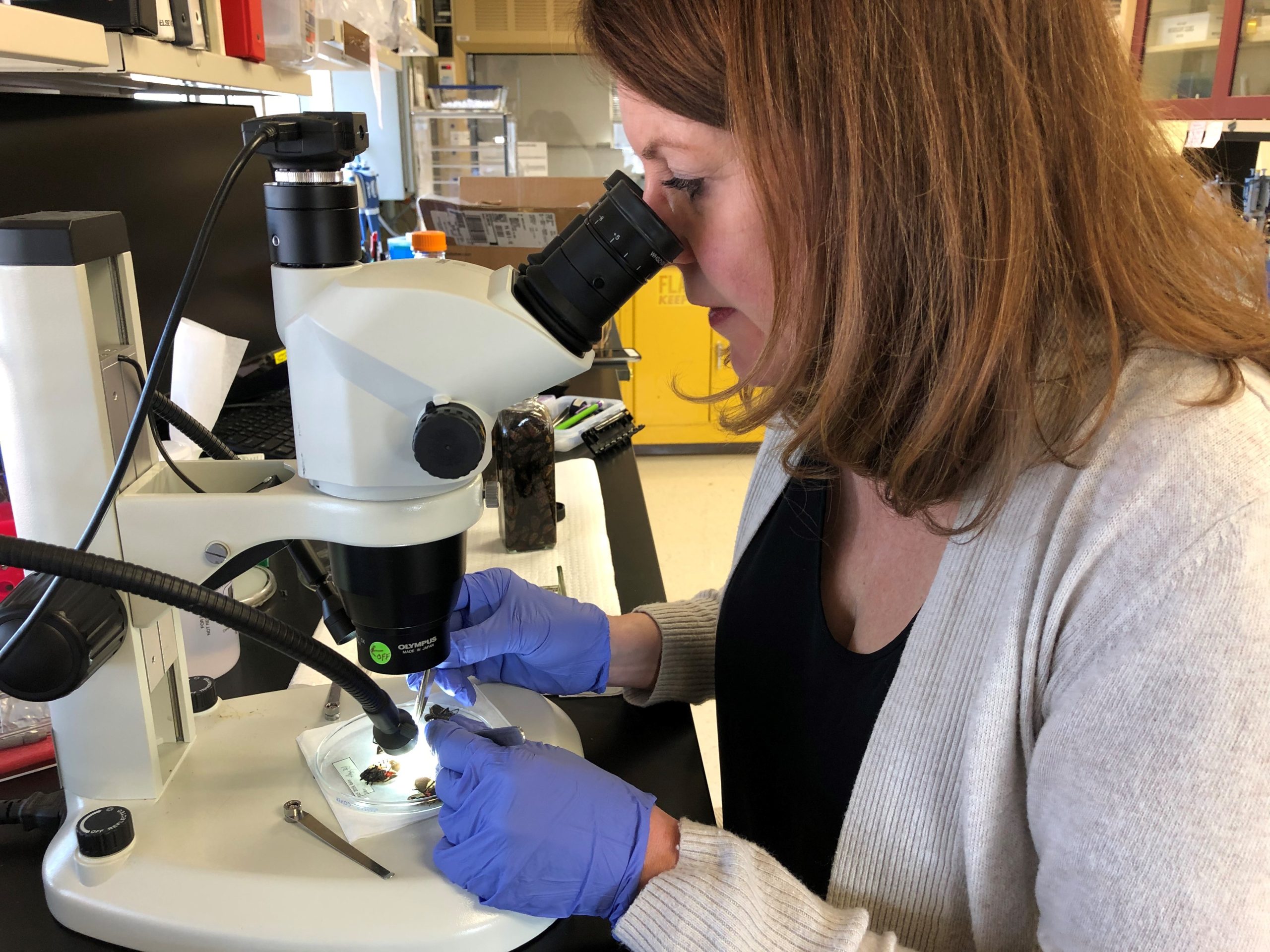
Dr. Julie Urban – Dr. Julie Urban is a Research Associate Professor in the Entomology Department at Pennsylvania State University. She earned her Ph.D. in Evolutionary Biology from the University at Albany. She studies planthopper evolution and their co-evolution with multiple bacterial and fungal symbionts. Her recent work involves aspects of basic and applied research on the invasive planthopper, the Spotted Lanternfly (Lycorma delicatula). She has been a member of USDA’s Technical Working Group of scientists, advising management and research on the Spotted Lanternfly, since it was first detected in the US in September, 2014. Dr. Urban is the lead PI on a $7.3M regional USDA NIFA Specialty Crops Research Initiative grant studying the biology, management, reducing the impact of Spotted Lanternfly in specialty crops in the eastern USA.

Dr. Amanda Roe – Dr. Amanda Roe is a Research Scientist with Natural Resources Canada at the Great Lakes Forestry Centre based in Sault Ste. Marie, Ontario, Canada. Her research team focuses on the evolutionary ecology of forest pests. They quantify the cold tolerance physiology and population genomics of invasive and native forest pests to characterize their history of spread and predict the risk of future establishments. This knowledge supports the management and regulation of high-risk pests, informing risk assessments and forest management. Dr. Roe also provides scientific oversight to the Insect Production and Quarantine Laboratory, an internationally recognized multi-species rearing facility that provides research-quality insects and insect diets to clients around the world.
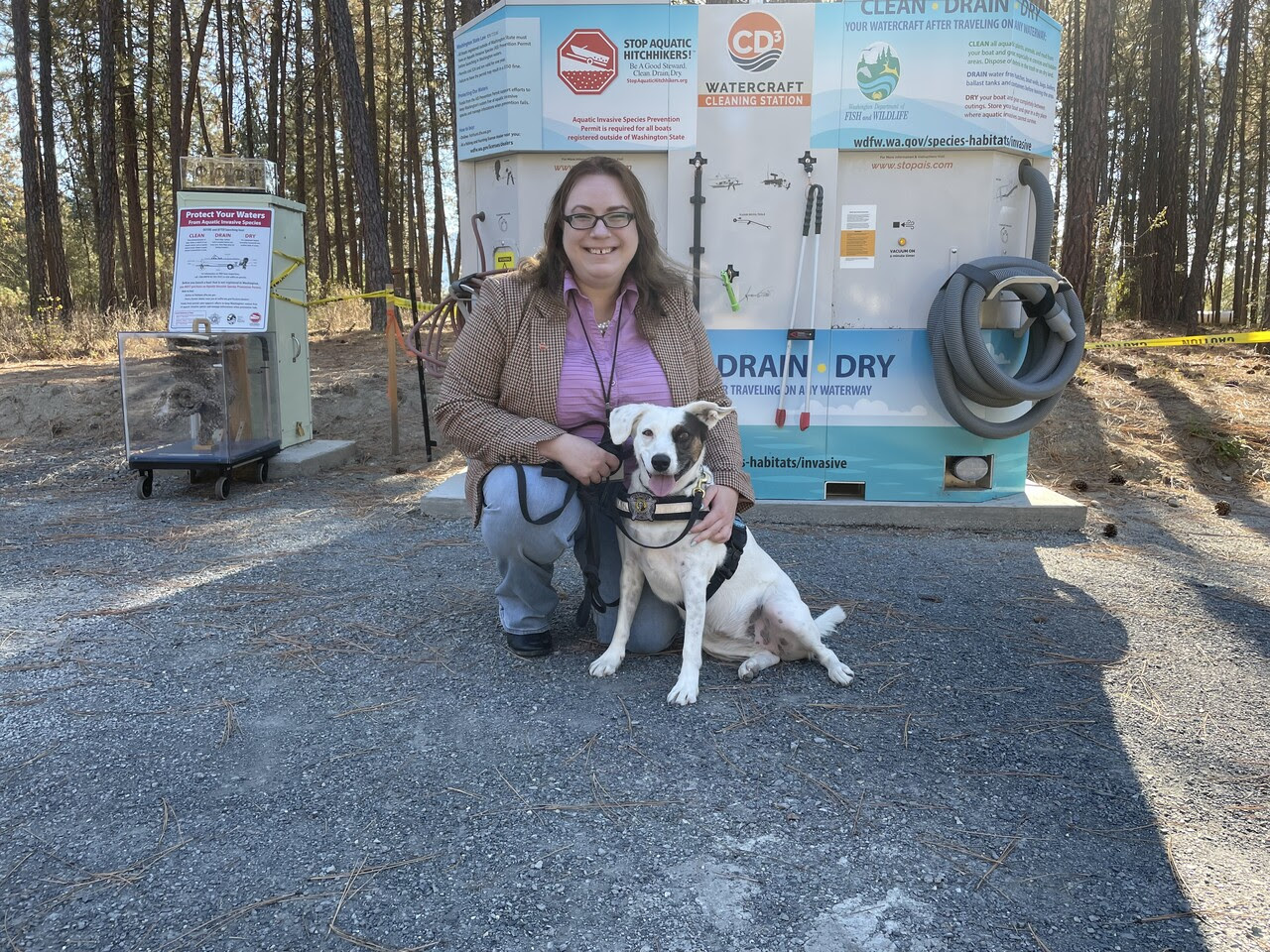
Jessica La Belle – Jessica is the Invasive Species Program Specialist for the Washington Invasive Species Council and facilitator for the multi-agency Spotted Lanternfly Preparedness Advisory Group. She has worked with a variety of invasive species from apple maggot to zebra mussels. Jessica was the primary public point of contact when the discovery
of northern giant hornet in Washington state became national news and a viral internet sensation. She assisted in the dissection of the first northern giant hornet nest found in the US, and has been featured on the Discovery Channel, RFD-TV, and YouTube. She holds
a bachelor’s degree in English from the University of Alaska Anchorage, and a Master’s in agricultural sciences and extension education from Colorado State University.

Dr. Michelle Duennes – Dr. Michelle Duennes is an Associate Professor of Biology at Saint Vincent College in Latrobe, Pennsylvania. She teaches General Biology II, Ecology, Evolution, and Invertebrate Zoology. Her research focuses on bumble bee nutritional ecology and conservation genomics, and now also spotted lanternfly invasion genetics. She is one of the co-founders of the Spotted Lanternfly Invasion Archive, a citizen science project where participants are encouraged to collect spotted lanternflies yearly to track how they move and adapt over time.