For more than six decades, the scientists at the Foundation for the Study of Invasive Species (in Spanish, Fundación para el Estudio de Especies Invasivas, FuEDEI) have worked from Argentina to safeguard North American natural and agricultural ecosystems. Located in Hurlingham, Buenos Aires, Argentina (Fig. 1), FuEDEI operates through a cooperative agreement as an Overseas Biological Control Laboratory within the Office of International Research Engagement and Cooperation (USDA-ARS-OIREC). FuEDEI’s main mission is to search for and study biological pest control agents; send selected agents to the United States and cooperating countries; provide logistical support in South America to researchers from the U.S. and cooperators abroad, and liaise with local and foreign universities and agricultural research agencies for cooperative work.


Research profile
Integrating Field Biocontrol, Genomics, and Education: Water Hyacinth Management. Water hyacinth (Pontederia crassipes) remains one of the world’s most aggressive aquatic weeds. FuEDEI has long focused on the development and evaluation of host-specific biological control agents, including the weevils Neochetina bruchi and N. eichorniae, and the planthopper Megamelus scutellaris (Fig. 2), that have been introduced in the United States, as well as in many other countries around the world.
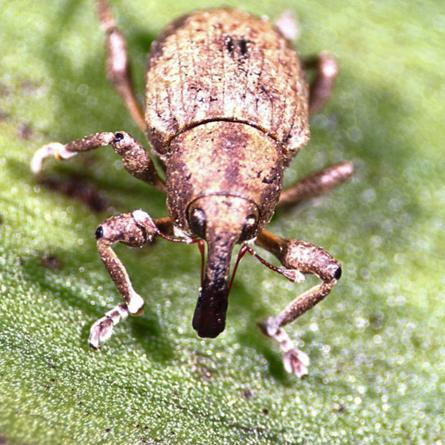
Figure 2. Neochetina bruchi (left) and Megamelus scutellaris (right).
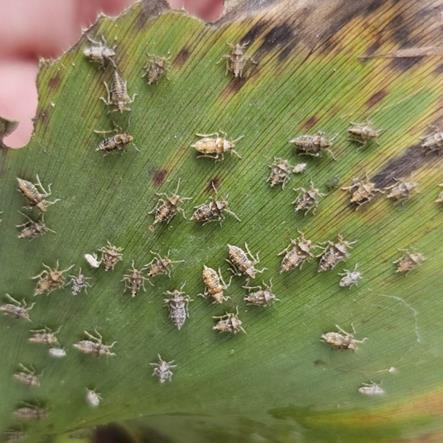
The genomic breakthrough. To optimize water hyacinth biocontrol efficiency, FuEDEI researchers are leading a genomic research on M. scutellaris (Fig. 3). They mapped three distinct genetic lineages across the native South American range. Comparative genomic studies of native vs. introduced populations in the U.S. and South Africa revealed that introduced populations have genetically diverged from their original sources. This finding allows scientists to select precise, climate-matched source biocontrol agent populations to improve field performance in specific introduced regions.

Figure 3. Water hyacinth (left) and M. scutellaris (right).

The International Water Hyacinth Genomics Initiative. Expanding on its molecular research, FuEDEI is leading an open, collaborative global framework to generate, curate, and share a high-resolution global genomic database of water hyacinth using whole-genome sequencing (WGS) (Fig. 4). By analyzing population genetics across native and invaded ranges, the project focuses on reconstructing regional and global invasion pathways and identifying the specific genomic regions linked to the plant’s environmental adaptability and invasiveness. This international effort invites global researchers to collaborate by contributing plant tissue samples, raw sequencing data, or metadata to build a definitive asset for global weed management communities.

The Educational Shift. In parallel with lab discoveries, FuEDEI is pioneering an education-driven strategy in Argentina that transforms biological control into local public policy. Since 2018, a biological control program against water hyacinth is underway in a lake near Buenos Aires. The program’s success has been driven by a strong inter-institutional network that includes FuEDEI, local schools, a natural reserve, and the local government (Fig. 5).

Saving Puerto Rico’s Cacti. The Harrisia Cactus Mealybug (HCM) poses a serious threat to cactus-rich ecosystems and commercial pitahaya plantations throughout the Caribbean, Central America, and North America (Fig. 6). Since 2010 FuEDEI have been carrying out in cooperation with the ARS and APHIS, a biocontrol program against this pest to minimize mortality of native cactus species in Puerto Rico, facilitate the restoration of dry forests affected by the mealybug, and protect commercial pitahaya crops. Key achievements to date include the identification, description, and differentiation of HCM species (Hypogeococcus pungens species complex), as well as the selection of two promising biological control agents from South America: the parasitoid wasps Anagyrus cachamai and A. lapachosus (Fig. 7). A petition to release both parasitoid species has been submitted to APHIS and the Puerto Rican Department of Agriculture.

Figure 6. Pilosocereus armatus with HCM
infestation.

Figure 7. Anagyrus lapachosus parasitizing
nymphs of Hypogeococcus sp.
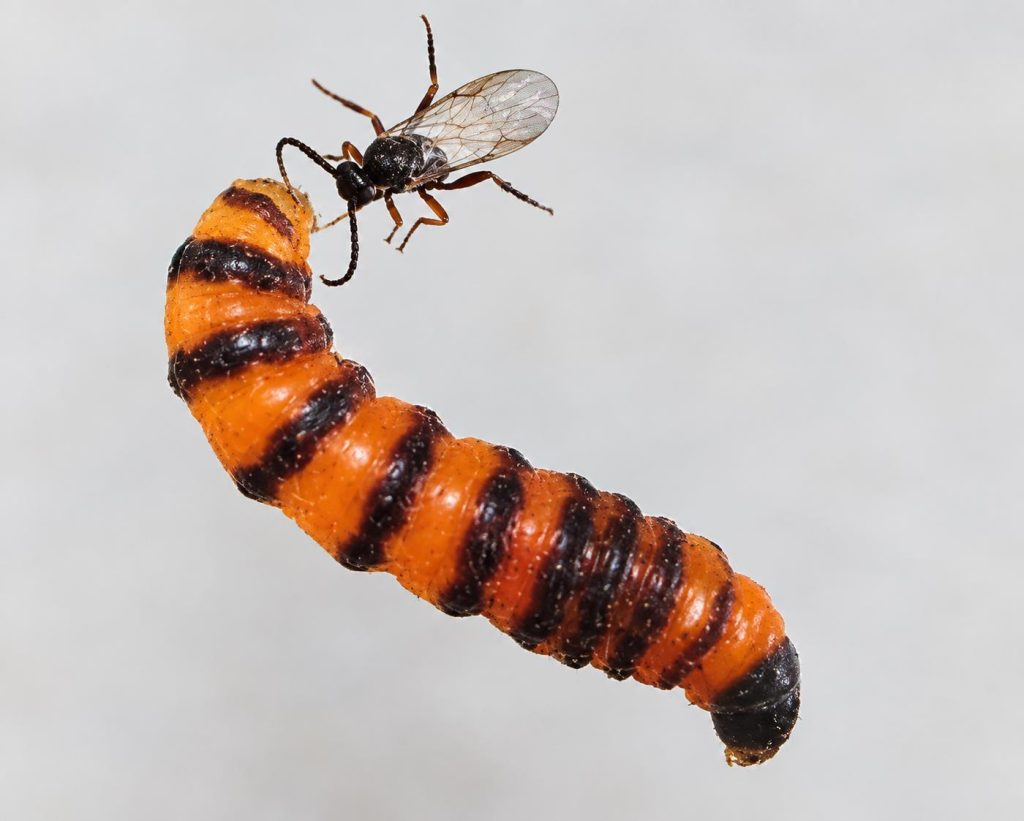
A tiny wasp is one step closer to stop the invasive cactus moth in the United States. The invasive cactus moth (Cactoblastis cactorum) poses a critical ecological threat to native Opuntia (prickly pear) species across the US and Mexico. In cooperation with the ARS and the Florida Department of Agriculture & Consumer Services, FuEDEI’s team identified the specialist parasitoid wasp Apanteles opuntiarum as a promising biocontrol agent (Fig. 8). APHIS (Animal and Plant Health Inspection Service) has recently declared a 30-day public review process for the release of A. opuntiarum, placing us very close to the field release of this wasp in the U.S.
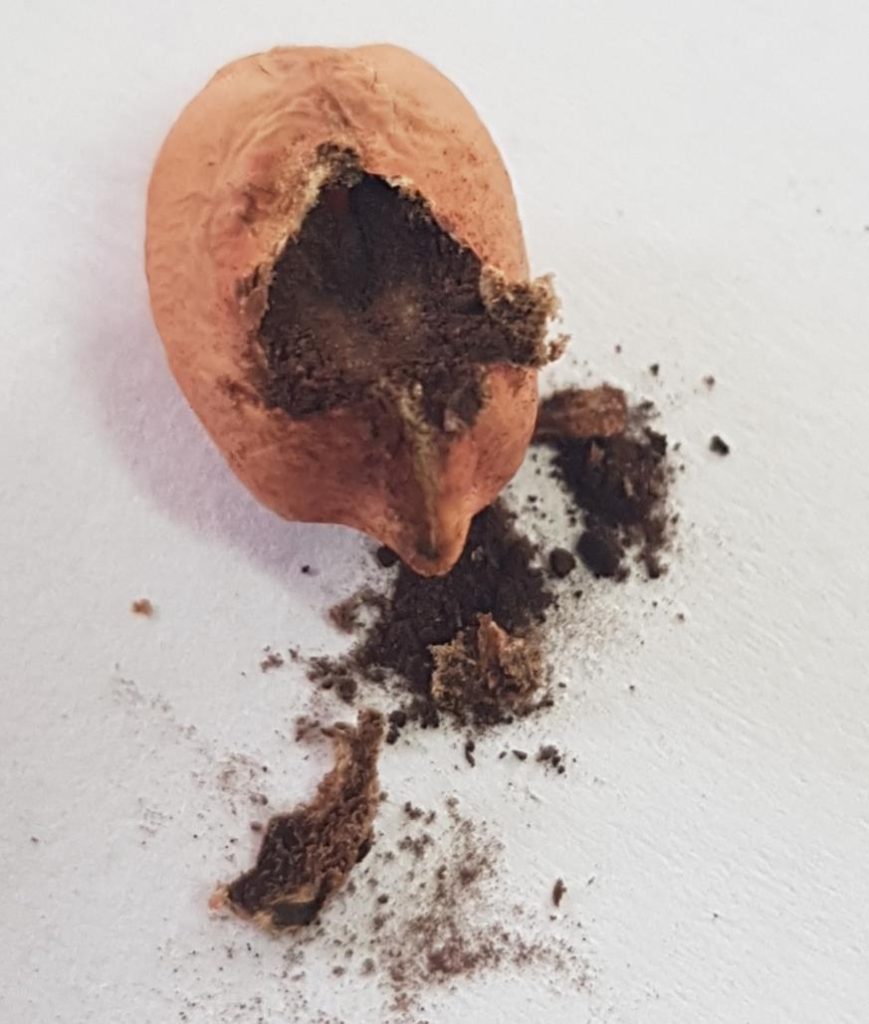
Proactive Agricultural Biosecurity. The Peanut smut (Thecaphora frezzii) is currently the most damaging disease of this crop (Fig. 9). It is a fungal disease spread by highly resistant spores that can remain viable in the soil for many years. Effective management strategies are mostly focused on the development of resistant peanut cultivars. At the moment this disease is only known to be present on commercial peanuts in Argentina, the largest peanut exporter in the world. There are, however, concerns over the risk of the disease spreading across the world. For this reason, FuEDEI is working in cooperation with USDA-ARS, several private stakeholders, and the National Agricultural Institute of Argentina (INTA) in order to better understand the biology of this pathogen, the natural intra-specific genetic diversity in different parts of its native range in South America, and how it interacts in nature with wild peanut species (Arachis spp.). This involves both field work, through surveys of domesticated and wild species of peanuts in their native range, and lab work, developing techniques that allow the multiplication of the smut in vitro in order to study its genetics, biology, and infection mechanisms, with a long-term view to developing varieties of peanuts resistant to this disease before it continues to spread.
By working hand-in-hand with North American institutions and NAISMA, FuEDEI continues to deliver sustainable, low-impact biological solutions to restore balance to altered ecosystems.
For more information, explore our website, join our community by subscribing to our newsletter, and follow us on Instagram (@fuedei_ar) and Facebook at @FuEDEI.