At first glance, Tree-of-Heaven (Ailanthus altissima) may appear to be just another tree growing along a roadside, railroad, vacant lot, or urban landscape. Its rapid growth, tolerance of poor soils, and ability to thrive where other trees struggle can make it seem beneficial. Unfortunately, these same characteristics have made Tree-of-Heaven one of the most aggressive invasive trees in North America (USDA National Invasive Species Information Center; USDA Forest Service).
Today, Tree-of-Heaven threatens forests, natural areas, transportation corridors, urban infrastructure, and agricultural systems. Its ability to outcompete native vegetation, reproduce prolifically, and support another notorious invasive species, the spotted lanternfly (Lycorma delicatula), has elevated it to a high-priority management concern across much of the United States and Canada (USDA Forest Service; Penn State Extension).
Whether you are a land manager, forester, arborist, conservation professional, or homeowner, learning to recognize and manage Tree-of-Heaven is an important step toward protecting native ecosystems.
What Is the Tree-of-Heaven?
Tree-of-Heaven is native to China and parts of Taiwan. It was first introduced to the United States in the late 1700s as an ornamental tree because of its tropical appearance and remarkable ability to grow in poor soils and polluted urban environments (USDA National Invasive Species Information Center).
Throughout the nineteenth and early twentieth centuries, municipalities widely planted Tree-of-Heaven because it tolerated drought, compacted soils, road salt, smoke, and industrial pollution better than many native tree species.
Unfortunately, these same characteristics have enabled it to escape cultivation and spread aggressively throughout much of North America.
Today, Tree-of-Heaven is established across dozens of U.S. states and several Canadian provinces, where it invades forests, roadsides, abandoned fields, utility corridors, riparian areas, and disturbed natural habitats (Center for Invasive Species and Ecosystem Health).

How to Identify Tree-of-Heaven
Correct identification is essential because Tree-of-Heaven is sometimes confused with native species such as black walnut, hickory, staghorn sumac, or ash.
Key identification characteristics include:
- Smooth gray bark on younger trees that gradually becomes lightly ridged with age.
- Large compound leaves measuring 1–4 feet long with 10–40 leaflets.
- Distinctive glandular teeth near the base of each leaflet.
- Clusters of papery, winged seeds called samaras, often remaining on female trees through winter.
- Smooth brown twigs with large heart-shaped leaf scars.
- A strong odor resembling rancid peanut butter, burnt peanut butter, or spoiled cashews when leaves or stems are crushed (Penn State Extension; USDA Forest Service).
Because Tree-of-Heaven leaflets resemble those of native black walnut and sumac, the glandular teeth and unpleasant odor are among the most reliable identification features.
Why Tree-of-Heaven Is Such a Serious Invasive Species
Tree-of-Heaven possesses numerous biological characteristics that allow it to dominate disturbed landscapes and displace native vegetation.
Rapid Growth
Few native tree species can match the growth rate of Tree-of-Heaven. Under favorable conditions, young trees may grow 3 to 6 feet each year and eventually reach heights exceeding 80 feet (USDA Forest Service).
This rapid growth allows Tree-of-Heaven to quickly occupy disturbed sites before native species become established.
Allelopathy
Perhaps one of Tree-of-Heaven’s most remarkable—and problematic—adaptations is its production of ailanthone, an allelopathic compound released from roots, bark, and leaves.
Ailanthone suppresses seed germination and growth of nearby plants, effectively reducing competition and allowing Tree-of-Heaven to dominate invaded sites (Heisey, 1996; USDA Forest Service).
This natural chemical weapon makes ecological restoration especially difficult because native seedlings often struggle to establish beneath mature Tree-of-Heaven stands.
Extraordinary Reproductive Capacity
A single mature female Tree-of-Heaven can produce hundreds of thousands of winged seeds annually, many of which are dispersed long distances by wind (USDA National Invasive Species Information Center).
Even more problematic is its ability to reproduce vegetatively.
Trees readily produce dense colonies of root sprouts that may emerge 50 feet or more from the original trunk following injury or cutting (Penn State Extension).
This makes Tree-of-Heaven particularly difficult to eradicate once established.
Tolerance of Harsh Conditions
Tree-of-Heaven thrives where many native trees cannot.
It tolerates:
- Drought
- Air pollution
- Road salt
- Poor soils
- Compacted ground
- Construction disturbance
- High temperatures
This adaptability explains why it frequently colonizes vacant lots, transportation corridors, utility rights-of-way, forest edges, and post-construction landscapes (USDA Forest Service).
Tree-of-Heaven and the Spotted Lanternfly
One of the greatest concerns surrounding Tree-of-Heaven today is its relationship with the invasive spotted lanternfly (Lycorma delicatula).
Although spotted lanternflies feed on more than 70 plant species, Tree-of-Heaven is considered one of their preferred hosts during important stages of their life cycle (Penn State Extension).
Large infestations of Tree-of-Heaven often support high lanternfly populations, which subsequently spread to vineyards, orchards, hardwood forests, and ornamental landscapes.
Spotted lanternflies feed by piercing plant tissues and extracting sap. Heavy infestations weaken plants while producing large amounts of honeydew that promotes sooty mold growth.
The insect poses significant economic risks to:
- Grapes
- Apples
- Stone fruits
- Hops
- Hardwood industries
- Nurseries
- Landscaping businesses
Because of this relationship, managing Tree-of-Heaven is considered an important component of spotted lanternfly management programs (USDA APHIS; Penn State Extension).
Ecological and Economic Impacts
Tree-of-Heaven creates ecological damage that extends well beyond the areas it directly occupies.
Its impacts include:
- Reduced native plant diversity
- Altered forest succession
- Suppressed regeneration of valuable hardwood species
- Lower wildlife habitat quality
- Increased management costs for parks and natural areas
Communities also incur substantial costs removing trees that damage:
- Sidewalks
- Foundations
- Roads
- Sewer systems
- Utility corridors
In agricultural regions, the tree’s role in supporting spotted lanternfly populations adds millions of dollars in potential crop protection and management expenses (USDA APHIS).
Managing Tree-of-Heaven
Successful management requires persistence and an integrated approach.
Mechanical Control
Cutting Tree-of-Heaven alone is generally ineffective.
Because the tree responds by producing numerous root sprouts, simple removal often creates even larger infestations (Penn State Extension).
Repeated mowing or girdling may weaken trees over time but rarely eliminates established populations without additional treatment.
Chemical Control
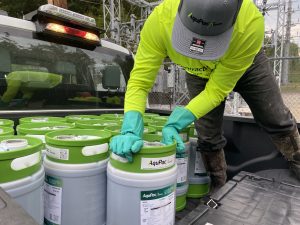
Systemic herbicides remain the most effective control method for established trees.
Common techniques include:
- Basal bark applications
- Hack-and-squirt treatments
- Stem injections
- Cut-stump applications
Foliar herbicide applications may effectively control seedlings and small saplings when applied during appropriate times of year (USDA Forest Service).
Always follow pesticide label directions and consult your local Cooperative Extension office or state forestry agency for region-specific recommendations.
Integrated Management
Long-term success usually requires:
- Removing seed-producing female trees first.
- Treating root systems with systemic herbicides.
- Monitoring sites annually for new sprouts.
- Restoring treated areas with native vegetation.
Because seeds remain viable and root sprouts persist, follow-up monitoring for several years is essential.
Biological Control Research
Researchers continue evaluating biological control options for Tree-of-Heaven.
Current research includes investigations into host-specific fungal pathogens such as Verticillium nonalfalfae and insect biological control agents that may eventually provide additional management tools (USDA Forest Service).
These approaches remain under evaluation and are not yet broadly available for operational management.
How You Can Help
Whether you own property or simply enjoy spending time outdoors, you can help slow the spread of Tree-of-Heaven.
You can make a difference by:
- Learning to correctly identify Tree-of-Heaven.
- Reporting new infestations to your local invasive species program or forestry agency.
- Avoiding the intentional planting of Tree-of-Heaven.
- Removing young trees before they mature and produce seeds.
- Following PlayCleanGo® practices by cleaning boots, vehicles, tools, and equipment before leaving recreation areas to reduce the movement of invasive plants and other pests.
Protecting North America’s Forests Starts with Awareness
Tree-of-Heaven is a textbook example of how an introduced ornamental plant can transform ecosystems over time.
Its rapid growth, prolific reproduction, chemical suppression of native plants, and role in supporting spotted lanternfly populations have made it one of North America’s most challenging invasive trees.
Fortunately, early detection, coordinated management, and public education are making a difference. By learning to recognize Tree-of-Heaven, supporting invasive species management programs, and preventing its spread, each of us can help protect healthier forests, stronger communities, and more resilient ecosystems for future generations.
Management and Control
Tree-of-Heaven is notoriously difficult to eradicate, but a combination of approaches can help:
- Mechanical Control
- Cutting alone is ineffective; trees will resprout vigorously.
- Repeated mowing or girdling can weaken trees over time, but must be combined with herbicide treatment.
- Chemical Control
- Systemic herbicides applied to cut stumps or injected into stems are most effective.
- Foliar sprays may be used on seedlings or young trees, though timing and care are critical to avoid affecting native plants.
- Be sure to follow all label directions and consult your local Extension Office for herbicide guidelines specific to your region.
- Integrated Management
- Success often requires a multi-year effort combining cutting, herbicide, and follow-up monitoring.
- Removing seed-bearing female trees first can help reduce spread.
- Biological Control (Research Stage)
- Scientists are studying the potential to use a host-specific native fungal wilt pathogen and a weevil as potential biocontrol agents for Tree-of-Heaven.
Economic and Ecological Costs
The economic burden of Tree-of-Heaven is tied both to its own impacts and its role in supporting spotted lanternfly:
- Agriculture: Tree-of-Heaven indirectly fuels crop damage by providing habitat for lanternflies.
- Infrastructure: Cities spend significant resources removing trees that damage sidewalks, roads, and sewer systems.
- Forest Management: Ailanthus disrupts regeneration of valuable hardwood species, lowering long-term forest productivity.
Tree-of-Heaven is a textbook example of how one species, introduced with good intentions, can create cascading ecological and economic challenges. From outcompeting native trees to supporting destructive pests, Ailanthus continues to spread across North America’s urban and rural landscapes.
Managing this invader requires persistence, coordination, and investment. By supporting invasive species programs and spreading awareness, communities can slow its spread and protect native ecosystems.
References
Center for Invasive Species and Ecosystem Health. (n.d.). Tree-of-Heaven (Ailanthus altissima). https://www.invasive.org
Heisey, R. M. (1996). Identification of an allelopathic compound from Ailanthus altissima and characterization of its herbicidal activity. American Journal of Botany, 83(2), 192–200.
Penn State Extension. (n.d.). Tree-of-Heaven and Spotted Lanternfly Management. https://extension.psu.edu
USDA Animal and Plant Health Inspection Service (APHIS). (n.d.). Spotted Lanternfly. https://www.aphis.usda.gov
USDA Forest Service. (n.d.). Tree-of-Heaven (Ailanthus altissima). https://www.fs.usda.gov
USDA National Invasive Species Information Center. (n.d.). Tree-of-Heaven. https://www.invasivespeciesinfo.gov