Hydrilla (Hydrilla verticillata) is one of the most aggressive aquatic invasive plants in North America. It spreads quickly, forms dense underwater mats, and disrupts everything from fish habitat to water movement. Across the continent, this plant challenges natural resource managers, recreationists, and water utilities alike — costing millions each year to control.
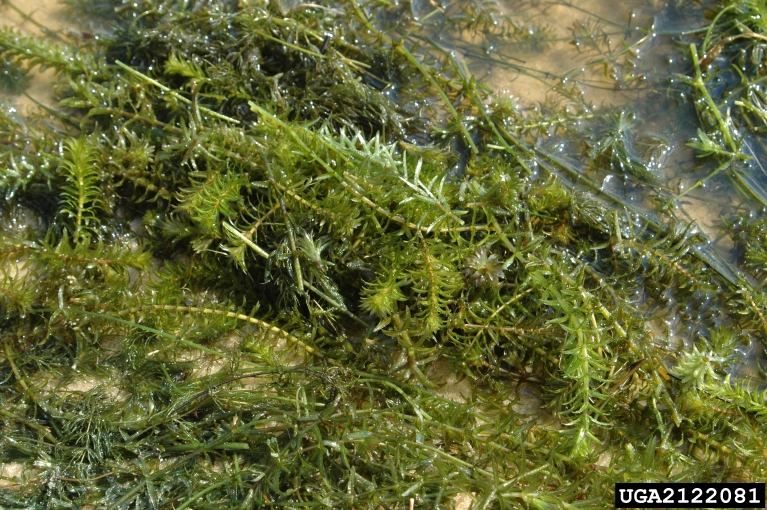
What Does Hydrilla Look Like?
Hydrilla is a submerged, rooted plant that grows in freshwater lakes, ponds, rivers, and canals. It can survive in both still and slow-moving water.
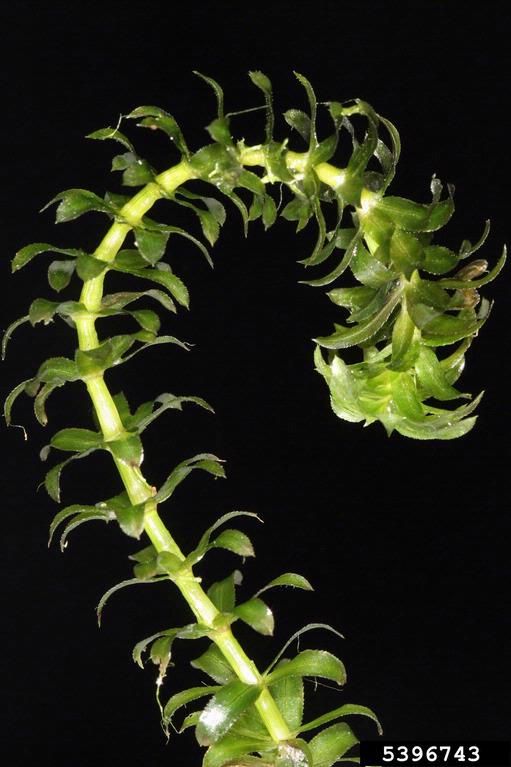
Key features to help identify hydrilla include:
- Leaves arranged in whorls of 3–8 around the stem, each with small serrated edges
- Tiny, potato-like tubers buried in the sediment (a major way the plant regrows)
- Small, dark buds called turions that form along the stems
These underground structures can remain viable for many years, making hydrilla extremely difficult to eliminate once it’s established.
Why Is Hydrilla a Problem?
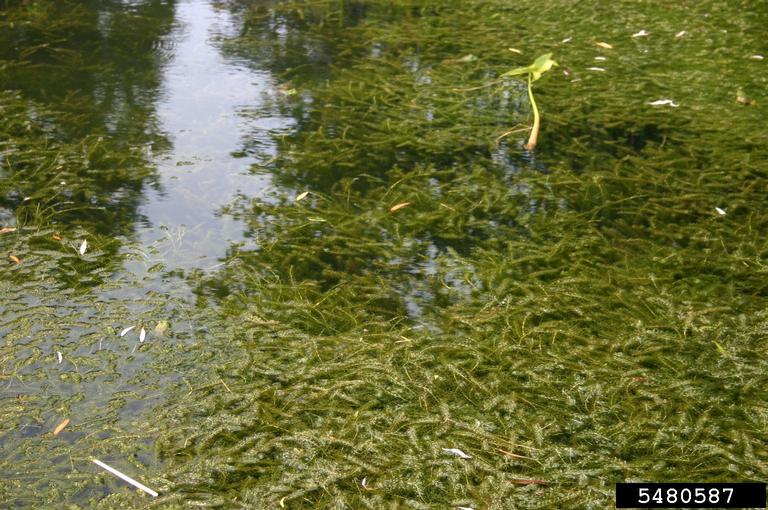
Hydrilla grows so densely that it can completely cover the water’s surface, blocking sunlight from reaching native plants below. This dense growth causes several problems:
- Loss of native habitat: Native aquatic plants are shaded out, and fish and invertebrates lose the diversity of habitat they need.
- Reduced oxygen: When large mats of hydrilla die and decompose, they can lower oxygen levels in the water and cause fish to die off.
- Impaired water flow: Thick stands of hydrilla clog irrigation canals, water intakes, and drainage systems, increasing maintenance costs.
- Navigation and recreation issues: Dense vegetation makes boating, fishing, and swimming difficult or unsafe.
- Infrastructure strain: Municipalities and water agencies spend millions clearing hydrilla from pumps, culverts, and turbines.
In short, hydrilla doesn’t just change the ecosystem — it affects water quality, infrastructure, and recreation.
How Does Hydrilla Spread?
Hydrilla spreads primarily through small plant fragments and underground tubers. Even a tiny piece of the plant can start a new colony.
Common ways hydrilla spreads include:
- Boats and trailers: Fragments hitch a ride on propellers, anchors, or live wells.
- Waterfowl and wildlife: Birds can carry plant fragments or tubers between lakes and rivers.
- Water movement: Rivers, canals, and stormwater systems transport fragments downstream.
- Human introductions: In the past, hydrilla entered new areas through the aquarium trade or intentional plantings for fish habitat.
Because it spreads so easily, early detection and rapid response are key to stopping new infestations before they grow out of control.
Managing Hydrilla: What Works
Once hydrilla becomes established, it is very difficult to eradicate. Successful management usually involves a combination of methods over multiple years.
Physical and Mechanical Control
- Harvesting and cutting can temporarily open waterways for recreation or water flow, but often increase spread if fragments are not contained.
- Drawdowns (lowering water levels) can be useful in northern climates where freezing kills the roots, but this method is less effective in southern regions.
- Diver-assisted suction harvesting can work for small patches if the entire root system, including tubers, is removed.
Biological Control
Certain fish and insects have been used to help manage hydrilla growth in controlled systems. However, these methods can sometimes affect native plants or vary in effectiveness depending on location. Managers should carefully evaluate risks before using biological controls.
Chemical Control
Herbicides are an important tool for managing hydrilla, particularly in large or heavily infested waterbodies. Treatments must be applied carefully and in compliance with all local, state, and federal regulations.
Always:
- Follow product label instructions exactly as written.
- Consult local authorities or permitting agencies before applying herbicides in or near water.
- Plan treatments thoughtfully, as rapid plant die-off can reduce oxygen levels and impact fish.
Combining chemical control with other management approaches (like mechanical removal or follow-up monitoring) provides the best long-term results.
Long-Term Management and Prevention
Hydrilla control is rarely a one-time effort. Managers often need to monitor treated areas for several years because tubers and fragments can remain dormant in sediments and later regrow.
Best practices for long-term management include:
- Treating early before dense beds or tuber banks develop
- Conducting pre- and post-treatment surveys to track progress
- Coordinating regionally with neighboring lakes or reservoirs
- Educating boaters and anglers to clean, drain, and dry their equipment after every trip
What You Can Do
Everyone who uses freshwater systems can help prevent hydrilla’s spread:
- Inspect and clean boats, trailers, and gear before moving between waterbodies.
- Drain all water from boats and equipment before leaving a launch area.
- Dispose of unwanted aquarium or pond plants properly — never release them into the wild.
- Report new sightings of hydrilla to your state invasive species hotline or through online mapping tools such as EDDMapS.