Soybean rust is one of the most significant invasive diseases affecting soybean production worldwide. Caused by fungal pathogens in the genus Phakopsora, the disease can spread rapidly under favorable environmental conditions, leading to premature defoliation, reduced yields, and increased production costs for farmers.
Since its arrival in the continental United States in 2004, soybean rust has remained an important concern for agricultural producers, researchers, and plant health agencies. Ongoing monitoring, forecasting, and early management are critical to limiting its impacts and protecting one of North America’s most valuable crops.
What Is Soybean Rust?
Soybean rust is caused by two closely related fungal pathogens:
- Phakopsora pachyrhizi – the more aggressive and economically important species
- Phakopsora meibomiae – a less damaging species that has not been detected in the continental United States
Of the two, P. pachyrhizi is responsible for nearly all major soybean rust outbreaks worldwide. The disease infects soybean leaves, where it produces small lesions and raised pustules that release large numbers of microscopic spores. These spores can spread quickly across fields and regions when environmental conditions are favorable.
Soybean rust is capable of infecting soybeans at any stage of growth, but infections that occur during reproductive stages often result in the greatest yield losses.
A Global Pathogen with a Long Reach
Originally described in Asia, P. pachyrhizi has spread to major soybean producing regions across Africa, South America, and North America. The disease was first detected in the continental United States in Louisiana in 2004, likely introduced through windborne spores associated with tropical storm systems.
Today, soybean rust is monitored closely across the United States through coordinated surveillance and forecasting efforts led by universities, state agencies, and federal partners.
One reason soybean rust has been so successful is its ability to spread long distances and survive on multiple host plants. In addition to soybeans, the pathogen can infect more than 90 species of legumes. In the southern United States, invasive kudzu (Pueraria montana var. lobata) serves as an important overwintering host, allowing the fungus to survive between growing seasons and produce spores that can spread northward each year.
How Soybean Rust Spreads
Soybean rust spreads primarily through airborne spores. Unlike many plant diseases that move slowly through contaminated soil or plant material, soybean rus can travel hundreds of miles on wind currents.
Several environmental conditions contribute to outbreaks:
- Warm temperatures and high humidity
- Extended periods of leaf wetness
- Dense plant canopies that retain moisture
- The presence of susceptible host plants, including kudzu and other legumes
Because spores are microscopic and easily dispersed by wind, outbreaks may appear suddenly and spread rapidly across large agricultural regions.
Why Soybean Rust Matters
Soybeans are one of the world’s most important agricultural commodities, used for livestock feed, vegetable oil, biofuels, and countless food products. Diseases that reduce soybean production can have significant economic impacts throughout the agricultural supply chain.
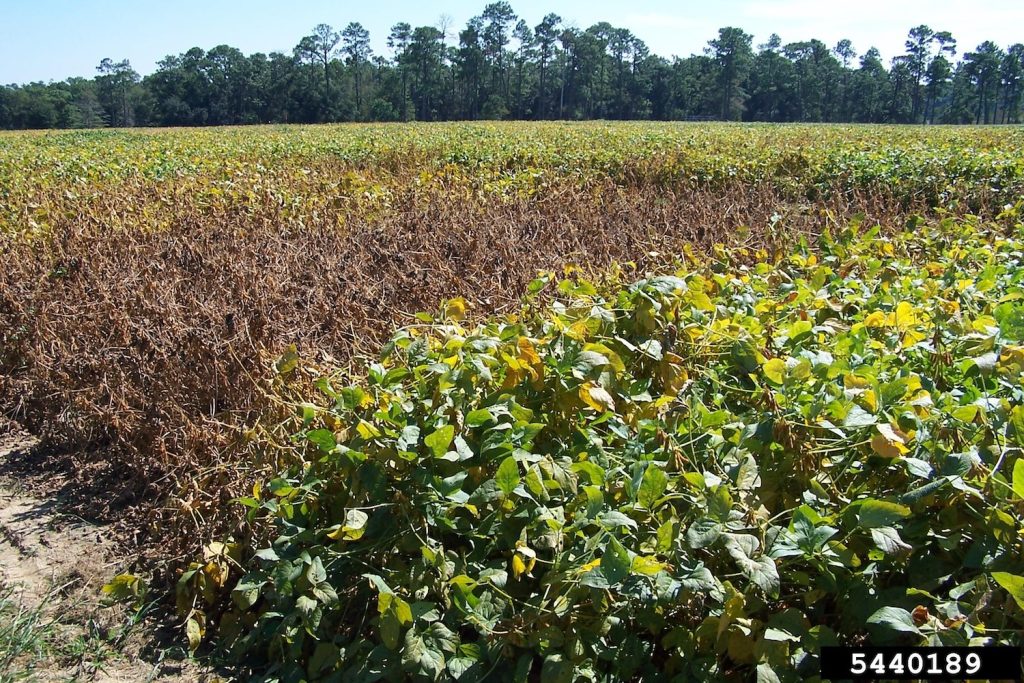
Soybean rust damages plants by reducing their ability to photosynthesize effectively. Heavily infected leaves turn yellow, develop lesions and pustules, and eventually drop prematurely. Severe defoliation during critical growth stages can substantially reduce pod fill and yield.
The severity of losses depends on environmental conditions, crop stage, and how quickly the disease is detected and managed. In 2012, soybean fields in Alabama experienced losses exceeding 60 percent in some heavily affected areas (Sikora et al. 2014). Early detection and treatment are considered essential to preventing severe economic damage.
In addition to direct yield losses, soybean rust increases production costs through:
- Repeated fungicide applications
- Additional scouting and monitoring efforts
- Increased management and labor costs
- Potential market and supply chain disruptions during severe outbreaks
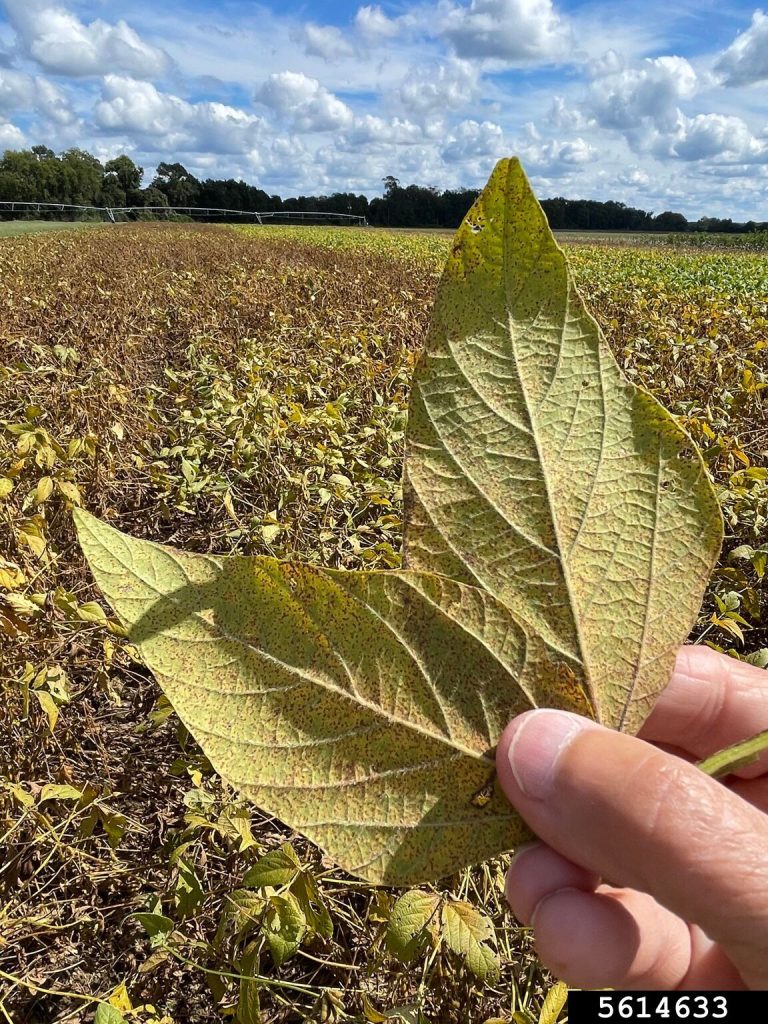
Identifying Soybean Rust
Early detection is one of the most important tools for managing soybean rus.
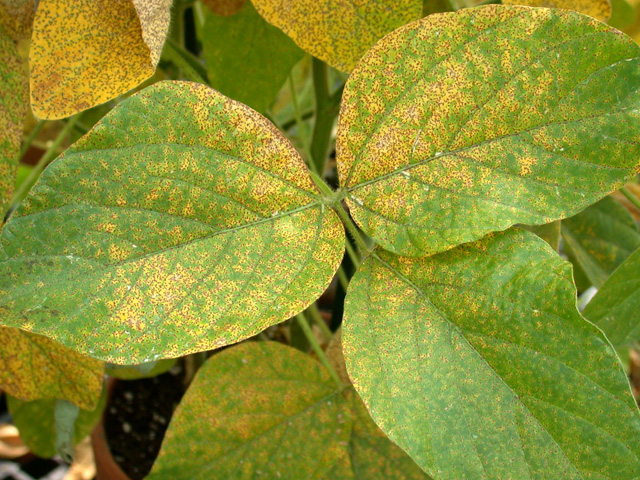
Symptoms often begin as small gray, tan, or reddish-brown lesions on leaves. As the disease progresses, tiny raised pustules develop, most commonly on the undersides of leaves. These pustules produce spores that allow the disease to spread rapidly.
Common signs include:
- Small yellow or brown lesions on leaves
- Raised pustules on leaf undersides
- Yellowing leaves
- Premature leaf drop
- Rapid disease development during warm, humid weather
Because symptoms can resemble other soybean diseases, laboratory confirmation may sometimes be necessary.

Management and Prevention
Soybean rust cannot currently be eradicated from affected regions, but Integrated Pest and Disease Management (IPDM) strategies can help reduce its impacts. Effective management combines monitoring, forecasting, cultural practices, and carefully timed treatments to reduce disease pressure and protect crop yields.
1.Monitoring and Forecasting
Regional monitoring programs track the movement and development of soybean rust throughout the growing season. Forecasting systems help producers determine when environmental conditions favor infection and when management actions may be necessary.
Historical soybean rust monitoring maps are available through the U.S. Integrated Pest Management PIPE program.
2. Fungicide Applications
Fungicides can help reduce soybean rust severity when applied early in disease development before severe infection and defoliation occur. Delayed treatment can significantly reduce effectiveness and increase the risk of yield loss.
Producers considering fungicide applications should always follow pesticide label instructions and consult local Extension specialists, crop advisors, or state agricultural agencies for current management recommendations appropriate to their region and growing conditions.
3. Resistant Varieties
Researchers have identified genetic resistance to soybean rust in some soybean lines, but resistance has often proven difficult to maintain over time because the pathogen can adapt rapidly. At present, there are no commercially available soybean varieties with fully durable resistance to soybean rust.
4. Integrated Pest and Disease Management (IPDM)
Long-term soybean rust management relies on integrating multiple strategies, including:
- Field scouting and early detection
- Disease forecasting and monitoring tools
- Crop and environmental management practices
- Timely fungicide applications when warranted
- Coordination with Extension programs and agricultural specialists
An integrated approach helps producers make informed management decisions while reducing unnecessary treatments and improving long-term disease management outcomes.
Reporting and Additional Resources
Because soybean rust can spread rapidly and impact regional agriculture, reporting suspected infections is important. Producers and land managers who suspect soybean rust should contact their local Extension office, state department of agriculture, or plant diagnostic laboratory for assistance.
Additional information and monitoring resources are available through:
- USDA APHIS Soybean Rust Resources
- University of Nebraska CropWatch Soybean Rust Information
- Soybean Rust Historical Maps and Monitoring Data
Soybean rust demonstrates how invasive plant pathogens can threaten agricultural systems on a continental scale. Continued monitoring, research, and coordinated management remain essential for reducing the impacts of this persistent disease and protecting soybean production across North America.
Reference
Sikora, E. J., Allen, T. W., Wise, K. A., Bergstrom, G., Bradley, C. A., Bond, J., Brown-Rytlewski, D., et al. 2014. A coordinated effort to manage soybean rust in North America: a success story in soybean disease monitoring. Plant Disease 98:864–875.