Across much of North America, Amur honeysuckle has become a familiar sight along roadsides, forest edges, parks, and residential landscapes. Its dense foliage, fragrant flowers, and bright red berries may appear attractive, but beneath its ornamental appearance lies one of the most aggressive invasive shrubs threatening native ecosystems.
Because of its ability to establish, spread, and outcompete native vegetation, Amur honeysuckle has become a priority management species across much of North America. A clear understanding of its biology, impacts, and management strategies is essential for developing effective management programs.
What is Amur Honeysuckle?
Amur honeysuckle (Lonicera maackii) is a deciduous shrub native to eastern Asia, including China, the Korean Peninsula, Japan, and parts of eastern Russia. It was introduced to North America in the late 1800s for ornamental landscaping, wildlife habitat improvement, and erosion control. Since then, it has escaped cultivation and spread widely throughout natural areas.
Today, Amur honeysuckle is established across much of the Midwest, Northeast, and portions of the southeastern United States, where it invades forests, woodlands, riparian areas, and other disturbed habitats.
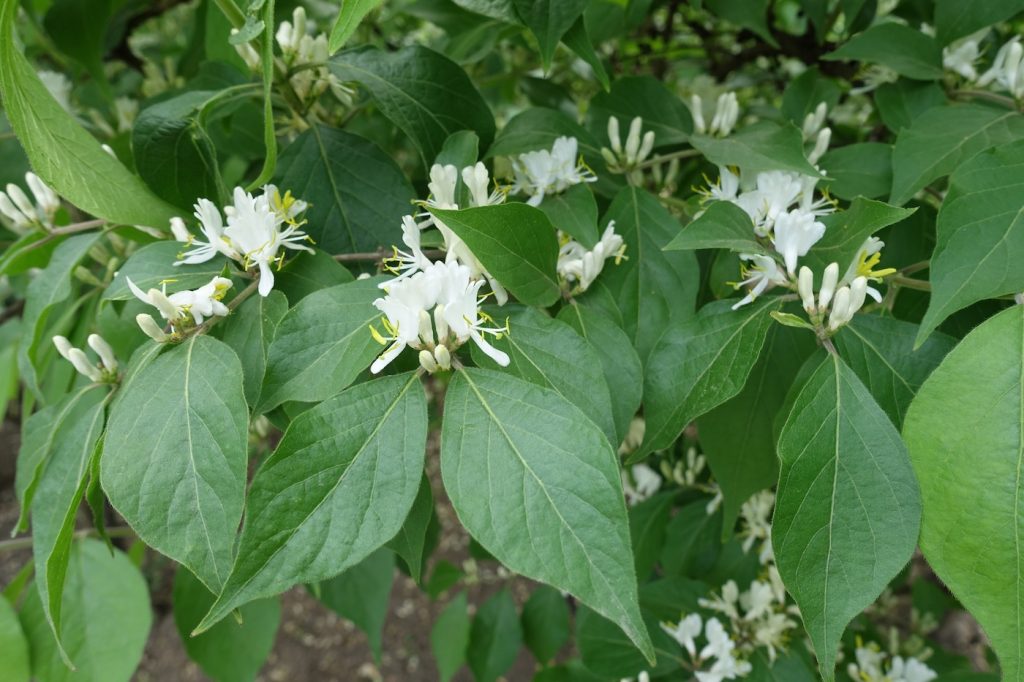
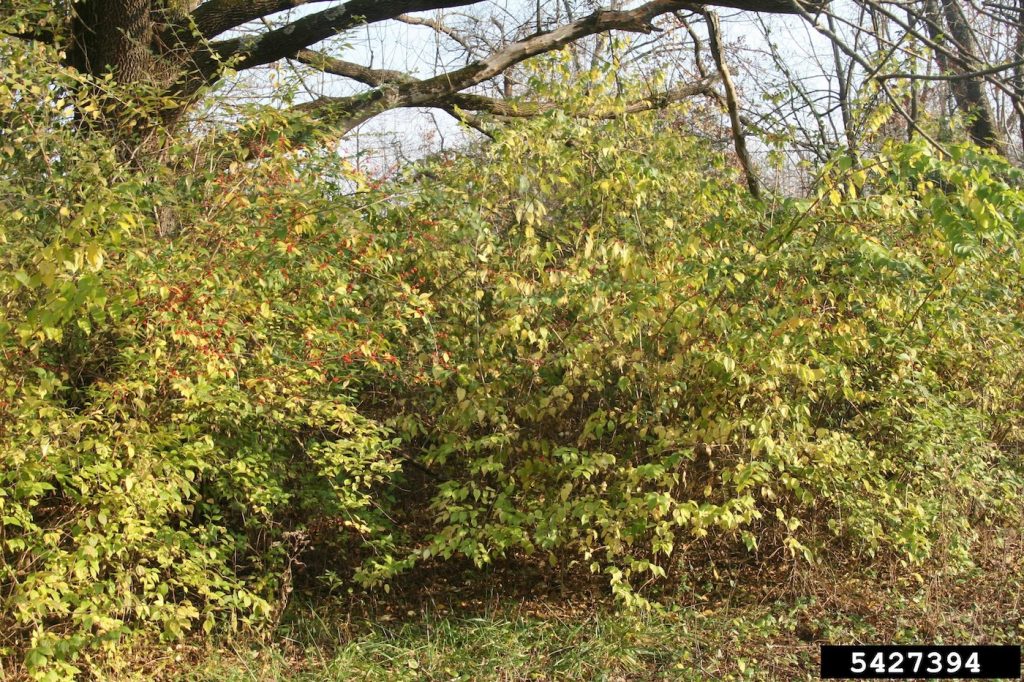
Mature shrubs can grow 15 to 20 feet tall and are identified by several distinctive characteristics:
- Opposite, oval-shaped leaves
- Fragrant white flowers that fade to yellow with age
- Bright red berries produced in late summer and fall
- Hollow stems with grayish-brown bark
- Dense, multi-stemmed shrubs that form thick stands
- Leaves that emerge earlier in spring and remain later into fall than many native shrubs
One of the easiest times to identify Amur honeysuckle is during early spring or late fall, when it remains green while many surrounding native plants are still dormant or have already dropped their leaves.

What Makes It Invasive?
Amur honeysuckle has several characteristics that allow it to establish quickly, outcompete native vegetation, and spread throughout natural areas.
- Extended growing season. Amur honeysuckle leafs out earlier in spring and retains its leaves later into the fall than most native shrubs and trees. This longer growing season allows it to capture sunlight before many native plants emerge and continue photosynthesizing after they have gone dormant, reducing the light available to native vegetation.
- Dense growth. The shrub grows rapidly and forms dense, multi-stemmed thickets that shade the forest floor and crowd out native plants. Over time, these infestations can reduce native plant diversity and limit the regeneration of trees and understory species.
- Efficient seed dispersal. Amur honeysuckle produces abundant bright red berries that are readily eaten by birds. Seeds are dispersed over long distances, allowing new infestations to establish well beyond existing populations.
What Are the Impacts?
Once established, Amur honeysuckle can alter forest structure, reduce native biodiversity, and make long-term restoration more challenging.
- Reduces native plant diversity. Dense infestations compete with native wildflowers, shrubs, and tree seedlings for sunlight, moisture, and nutrients. As native vegetation declines, forest understories often become dominated by Amur honeysuckle.
- Degrades wildlife habitat. Although birds readily eat the shrub’s berries, Amur honeysuckle does not provide the same habitat value as native vegetation. Replacing diverse native plant communities with dense stands of honeysuckle can reduce habitat quality and alter food resources for birds, pollinators, and other wildlife.
- Alters ecosystem processes. Dense infestations can change light availability, soil conditions, and nutrient cycling. These changes may make it more difficult for native plants to establish, even after Amur honeysuckle has been removed.
- Increases management challenges. Once established, Amur honeysuckle can spread rapidly and form extensive thickets that require repeated monitoring and treatment. Large infestations are often costly and time-consuming to control, particularly in forests, parks, and other natural areas.
How Can It Be Managed?
Managing Amur honeysuckle often requires an integrated approach that combines mechanical and chemical control methods. The most effective strategy depends on the size of the infestation, site conditions, available resources, and long-term management goals.
- Mechanical control. Small seedlings and young plants can often be hand-pulled when the soil is moist. Larger shrubs may be removed using weed wrenches or other extraction tools. Simply cutting mature shrubs is generally not sufficient, as plants readily resprout from the root crown.
- Cut-stump and basal bark treatments. For established shrubs, managers commonly combine cutting with a targeted herbicide application to the freshly cut stump to reduce resprouting. Basal bark treatments may also be an effective option for controlling some shrubs without cutting. Herbicides should always be selected and applied according to the product label, applicable federal, state, provincial, Tribal, or local regulations, and site-specific management objectives. Applicators should follow all label directions and wear the appropriate personal protective equipment.
- Foliar treatments. Carefully targeted foliar herbicide applications may be appropriate for dense infestations or where mechanical removal is impractical. Treatments should be timed to maximize effectiveness while minimizing impacts to desirable vegetation and should always follow the product label and applicable regulations.
- Follow-up monitoring. Successful management rarely ends after a single treatment. Sites should be monitored for several years to detect resprouting and new seedlings, allowing follow-up treatments before plants become reestablished.
What Can You Do?
Preventing new infestations and responding quickly to emerging populations are among the most effective ways to reduce the spread and impacts of Amur honeysuckle. Whether you are a land manager, natural resource professional, homeowner, or volunteer, you can help by:
- Learning to identify Amur honeysuckle and reporting new infestations when appropriate.
- Monitoring natural areas and restoration sites for new seedlings and resprouting plants.
- Removing small infestations before they become established.
- Avoiding the use of invasive honeysuckle species in landscaping and restoration projects.
- Selecting native shrubs, such as serviceberry, dogwood, viburnum, or elderberry, that provide valuable habitat for wildlife while supporting healthy ecosystems.
- Sharing information with colleagues, neighbors, and community members to help prevent the spread of invasive species.
Early detection and integrated management remain the most effective tools for limiting the spread and long-term impacts of Amur honeysuckle.