Invasive ant species may be small, but their impacts can be surprisingly large. From painful stings and damaged crops to disrupted ecosystems and costly management programs, invasive ants are creating growing challenges across North America.
During NAISMA’s May webinar, Small Ants, Big Impacts: Managing Invasive Ant Species in North America, three experts shared how very different invasive ant species are reshaping landscapes from Hawaii to California and across the eastern United States. While each species presents unique challenges, they also share common characteristics that make them difficult to manage. Many are easily transported through human activities, are difficult for the public to identify, and often remain unnoticed until populations become well established. As changing environmental conditions create new opportunities for invasive species to spread, the need for prevention, early detection, and coordinated management has never been greater.
Little Fire Ants: Maui Shows Why Early Detection Matters
Brooke Mahnken, Data Manager with the Maui Invasive Species Committee (MISC), opened the webinar by sharing Hawaii’s ongoing battle against the little fire ant (Wasmannia auropunctata), one of the world’s most destructive invasive ant species.
Little fire ants were first detected on Hawaiʻi Island in 1999, where they have since spread across much of the island. Their painful stings affect people, pets, livestock, and wildlife, while their tendency to form massive supercolonies disrupts native ecosystems, agriculture, and daily life. Today, widespread infestations require continual management by homeowners, farmers, schools, parks, resorts, and government agencies.
Beyond the economic and environmental impacts, Mahnken described how little fire ants have fundamentally changed how people interact with the outdoors. Pets and wildlife can suffer repeated stings that may lead to blindness, children are spending less time playing outside, and some families have stopped using traditional hunting areas because of the constant risk of being stung. Even simple activities such as gardening, picnicking, or visiting parks can become uncomfortable in heavily infested areas. These everyday impacts serve as a powerful reminder that invasive species affect not only ecosystems, but also our quality of life and our connection to the places we love.

Maui tells a different story.
When little fire ants were first detected on Maui in 2009, managers responded quickly with an aggressive early detection and rapid response program. Using peanut butter bait surveys, GPS mapping, GIS technology, and carefully planned treatment zones, crews have worked to locate infestations before they become too large to eradicate. That early investment continues to give Maui a realistic opportunity to eliminate infestations rather than simply manage them.
The program has continued to evolve as new tools become available. Treatments begin with insect growth regulators to suppress reproduction before transitioning to toxic baits that target the colony’s queens. For large and difficult-to-access infestations, MISC pioneered the use of helicopter applications to distribute gel bait across dense forest canopies. More recently, the team has begun using drones to treat targeted areas while also deploying a specially trained detector dog to locate infestations that would be difficult for crews to find through surveys alone.
Mahnken emphasized that living with little fire ants comes at a tremendous ecological and economic cost. His presentation demonstrated that investing in prevention and early response is far more effective than managing widespread infestations after they become established.
Argentine Ants: Restoring California’s Island Ecosystems
The webinar’s second presentation featured Christina Boser, biologist with the U.S. Fish and Wildlife Service, who shared lessons learned from years of work managing Argentine ants (Linepithema humile) on California’s Channel Islands.

Argentine ants are among California’s most widespread invasive ant species. They displace native ants that play important ecological roles, including seed dispersal, nutrient cycling, and supporting food webs. They also protect sap-feeding insects such as aphids and scale insects, increasing damage to agricultural crops including citrus and wine grapes.
On Santa Cruz Island, conservation partners pursued an ambitious goal: complete eradication.
Rather than simply reducing worker populations, researchers designed treatments specifically to eliminate reproductive queens. The team developed innovative hydrogel baits, reduced toxicant concentrations to improve bait transfer throughout colonies, and used helicopters to distribute bait across rugged landscapes. Extensive monitoring, predictive modeling, and detection dogs helped identify areas requiring additional treatments and guided adaptive management throughout the project.
Years of persistence have produced encouraging results. Native ant communities are returning to previously invaded areas, demonstrating that carefully planned eradication efforts can restore ecosystem function when combined with long-term monitoring and collaboration.
Boser also highlighted the importance of biosecurity. By strengthening prevention measures during future development and conservation projects, land managers can reduce the risk of introducing invasive ants before they become established.
Asian Needle Ants: An Emerging Threat in the Eastern United States
The webinar concluded with Dr. Christopher Hayes, entomologist at North Carolina State University, who introduced participants to one of the fastest emerging invasive ant species in the eastern United States: the Asian needle ant (Brachyponera chinensis).
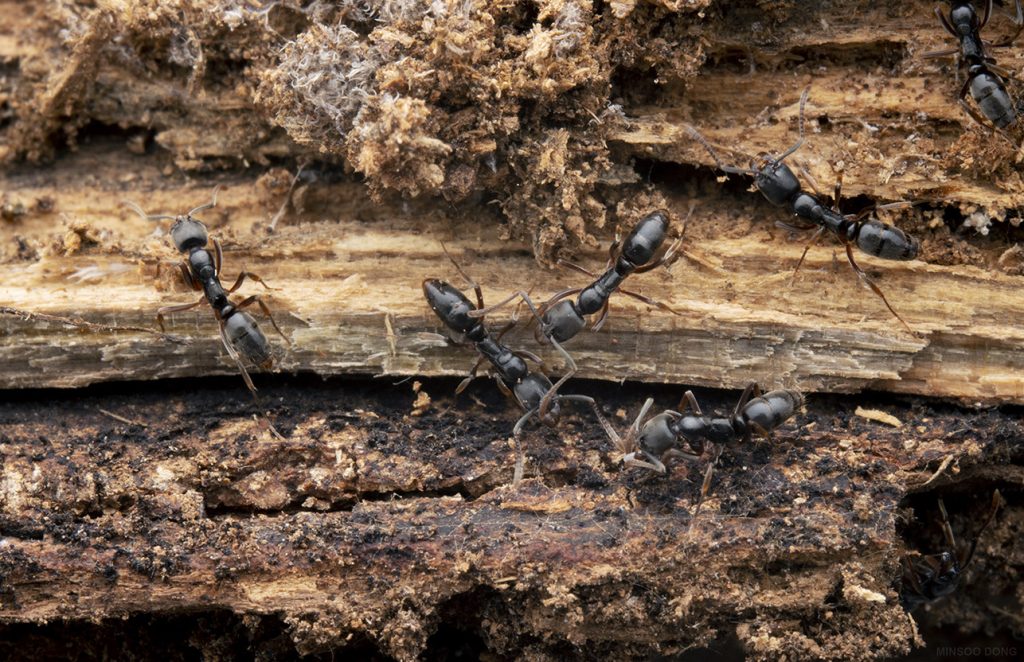
Although Asian needle ants have been present in the United States for nearly a century, their range continues to expand across the Southeast and into new states. Hayes explained that these ants thrive in forests and wooded landscapes where they commonly nest beneath decaying logs and bark, often alongside termite colonies that serve as their preferred food source.
Unlike many invasive ants, Asian needle ants do not rely on obvious foraging trails to recruit nestmates. Instead, workers use a behavior known as tandem carrying, physically transporting one another to food resources. While fascinating from a biological perspective, this behavior also makes the species more difficult to detect and manage using conventional baiting strategies. As temperatures warm and suitable habitat expands, researchers expect their range to continue shifting northward, making early awareness increasingly important.
Hayes also emphasized that Asian needle ants present a growing public health concern. Their sting can be extremely painful and, in some individuals, has been associated with severe allergic reactions, including anaphylaxis. At the same time, most people have never heard of Asian needle ants and would be unlikely to recognize them or distinguish them from other ants they encounter around their homes or while enjoying the outdoors. Increasing public awareness, improving identification resources, and encouraging people to report unusual ants will all play an important role in slowing their spread.
Common Lessons Across North America
Although the three presentations focused on different species, climates, and management approaches, they revealed several common themes.
Prevention remains the most effective defense against invasive ant species, but once introductions occur, early detection dramatically improves the likelihood of successful eradication. Long-term monitoring allows managers to evaluate treatments and respond to new discoveries before populations expand. Partnerships among agencies, researchers, and local communities strengthen response efforts, while continued innovation is providing new tools to address increasingly complex challenges.
The webinar also highlighted the important role the public plays in invasive ant management. Many invasive ants are difficult to identify without training, allowing infestations to grow unnoticed until they become much more difficult and expensive to manage. Building public awareness helps people recognize potential invasive ants, understand the risks associated with their spread, and report new detections before populations become established.
From GIS mapping and predictive modeling to helicopters, drones, hydrogel baits, and detector dogs, invasive ant management continues to evolve alongside the species themselves. As global trade, travel, and changing environmental conditions create new opportunities for invasive ants to establish and expand their ranges, continued investment in prevention, collaboration, public education, and science-based management will be essential to protecting North America’s ecosystems, agriculture, wildlife, and communities.
NAISMA Members can watch this webinar in our online library: https://members.naisma.org/login
Not a member? Join at the Professional level or above to access the webinar library and many other member benefits: https://naisma.org/membership/