Environmental conservation is about more than protecting land or preserving individual species. It is also about maintaining the ecological communities and processes that allow ecosystems to function, recover from disturbance, and continue supporting biodiversity into the future.
That work is becoming increasingly complex. Ecosystems are responding simultaneously to habitat loss and degradation, climate change, pollution, resource use, and biological invasions. Among these pressures, invasive species have emerged as a major driver of biodiversity loss worldwide.
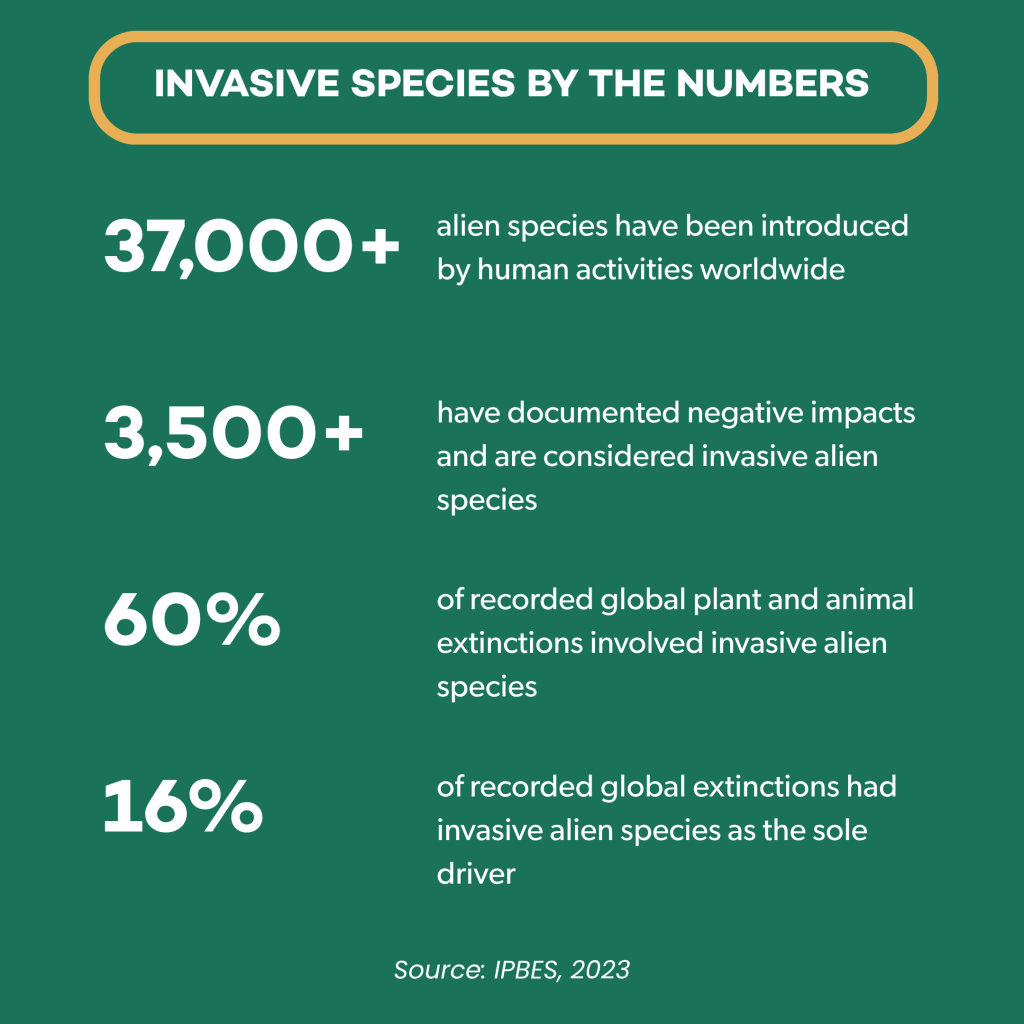
The 2023 IPBES Assessment Report on Invasive Alien Species and their Control, the most comprehensive global assessment of biological invasions to date, documented the global scale and consequences of biological invasions, from the growing number of species introduced outside their natural ranges to their impacts on ecosystems, economies, and human well-being.
Their impacts reach far beyond the presence of a new species on the landscape. Invasive species can alter habitats, disrupt food webs and ecological relationships, change ecosystem processes, threaten native species, and complicate efforts to restore ecosystems after disturbance. For these reasons, preventing and managing biological invasions is an important part of environmental conservation.
What Makes an Invasive Species a Conservation Concern?
Not every species found outside its native range is invasive. The term invasive species is generally used for non-native organisms whose introduction causes, or is likely to cause, environmental, economic, or human health harm.
Those harms can occur in many different ways.
An invasive predator may consume native species that are particularly vulnerable to predation. An invasive plant may become dominant and change the availability of food or habitat. Forest insects and pathogens can cause widespread tree mortality. Aquatic invaders may change water quality, habitat structure, or food webs. Some invasive species alter ecosystem processes such as nutrient cycling, hydrology, erosion, or fire regimes.
The result is not simply the addition of another species to an ecosystem. In some cases, biological invasions can change the ecological community itself.
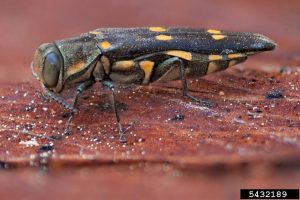
Across North America, these impacts are already visible in many forms. Emerald ash borer has caused extensive mortality of ash trees. Hydrilla can form dense growth that changes freshwater habitat, while invasive carp can affect aquatic food webs and native fish communities. On land, feral swine disturb vegetation, soils, wetlands, and waterways through rooting and wallowing.
These species differ dramatically in their biology and impacts, but each demonstrates why invasive species management is ultimately about protecting ecosystems, not simply controlling individual organisms.

Photo credit: Daniel Herms, The Ohio State University, Bugwood.org
When Biological Invasions Become Biodiversity Loss
The relationship between invasive species and biodiversity loss is well documented.
The IPBES assessment found that invasive alien species have contributed, either alone or alongside other drivers, to 60% of recorded global plant and animal extinctions. In 16% of documented global extinctions, invasive alien species were the only driver identified.
The extinction impacts are particularly pronounced on islands. According to IPBES, 90% of documented global extinctions in which invasive alien species were identified as a major cause occurred on islands. Island species may have evolved in relative isolation and can be particularly vulnerable to introduced predators, competitors, pathogens, and herbivores.
The threat is not limited to species that have already disappeared. A 2021 systematic review examined interactions between invasive species and species classified as Critically Endangered on the IUCN Red List. The researchers found that invasive species threatened 14% of critically endangered terrestrial birds, mammals, and reptiles globally, increasing to 28% on islands. Critically endangered birds were particularly affected, with invasive species threatening 25% globally and 47% on islands.
Extinction represents the most severe possible outcome, but conservation impacts can begin long before a species is lost. Declines in native populations, changes in species composition, altered habitat structure, and disruption of ecological relationships can all affect how ecosystems function.
For environmental conservation, that means invasive species management is not only about preventing extinction. It is also about maintaining the ecological conditions that allow native species and communities to persist.
Invasive Species, Climate Change, and Ecosystem Resilience
Biological invasions do not occur in isolation. Ecosystems are simultaneously responding to changing temperatures and precipitation, extreme weather, altered disturbance regimes, habitat modification, and other environmental pressures.
Climate change adds another layer of complexity.
A U.S. Forest Service science synthesis on the effects of climate change on invasive species describes several ways changing climatic conditions may affect biological invasions. As temperature, precipitation, and disturbance patterns shift, the distributions and impacts of some invasive species may also change. Some non-native species that are not currently invasive may become problematic under new conditions, while both native and non-native species may shift into areas where they did not previously occur.
These changes make resilience increasingly important to conservation planning. Managing an invasive species may reduce one source of ecological pressure, but long-term recovery can also depend on restoring the conditions and native communities that help an ecosystem resist reinvasion and respond to future disturbance.
The Costs Extend Beyond Biodiversity
The ecological consequences of biological invasions are accompanied by substantial economic costs.
A 2021 analysis of the InvaCost database estimated that biological invasions cost the North American economy at least US$1.26 trillion between 1960 and 2017. Reported costs increased from an average of approximately $2 billion per year in the early 1960s to more than $26 billion per year in the 2010s.
Those estimates include damages and expenditures across sectors ranging from agriculture and forestry to infrastructure and resource management. The researchers also cautioned that their estimate is likely conservative because economic costs have been documented for only a small proportion of known invasive species.
At least $1.26 trillion
Estimated reported economic costs of biological invasions in North America, 1960–2017.
Source: Crystal-Ornelas et al., 2021.
Economic estimates tell only part of the story. The loss of a native species, transformation of a wetland, decline in forest health, or disruption of ecological relationships may be difficult to fully represent in monetary terms.
Growing management costs can also place additional pressure on limited conservation resources, requiring agencies and land managers to balance invasive species management with other conservation and restoration priorities.
Preventing invasions and responding while populations are still limited therefore protects more than individual ecosystems. It can also preserve future management options.
Conservation Across the Invasion Curve
There is no single approach to invasive species management. The appropriate response depends on the species, ecosystem, extent of invasion, feasibility of management, available resources, and conservation objectives.
That is why invasive species professionals often think in terms of an invasion curve when considering management strategies over the course of an invasion.

At the earliest stages, the goal is to prevent harmful species from arriving or spreading into new ecosystems. When prevention is unsuccessful, early detection and rapid response (EDRR) can provide an opportunity to act while a population is still localized.
The U.S. Fish and Wildlife Service emphasizes prevention and EDRR as important strategies for addressing invasive species before they become widely established. Once an invasive species becomes widespread, eradication may no longer be feasible, and management objectives may shift toward containment, suppression, protecting high-value resources, reducing impacts, and supporting ecological restoration.
Restoration and monitoring remain important throughout this process. Removing or suppressing an invasive species does not automatically restore an ecosystem. Native vegetation may need to be reestablished, altered environmental conditions addressed, and treated areas monitored for reinvasion and ecological recovery.
Seen through this lens, invasive species management is not a separate activity from environmental conservation. It is a continuum of actions designed to protect biodiversity and ecosystem function at different stages of invasion.
Prevention Makes Conservation Everyone’s Business
Governments, Indigenous Peoples and communities, researchers, conservation organizations, land managers, businesses, and private landowners all have important roles in addressing biological invasions. But prevention also creates opportunities for everyone to participate in environmental conservation.
Many invasive species are transported unintentionally as people move between places. Seeds can travel in mud attached to boots, bikes, vehicles, and equipment. Aquatic organisms can be transported on boats and gear. Forest insects and pathogens can move to new areas in firewood. Plants introduced through horticulture can escape cultivation and establish in natural areas.
Prevention practices can help interrupt these pathways.
Programs such as PlayCleanGo encourage outdoor recreationists to clean mud, seeds, and plant material from footwear, pets, vehicles, and gear before moving to a new location. Clean Drain Dry provides similar guidance for preventing the movement of aquatic invasive species, while Don’t Move Firewood helps reduce the long-distance transport of forest pests.
These individual actions are most effective when they are part of a broader prevention system that also includes pathway management, regulation, surveillance, education, research, and coordinated action across jurisdictions.

Invasive Species Management Is Environmental Conservation
Biological invasions are one part of a much larger conservation challenge. Habitat loss, climate change, pollution, resource use, and other environmental pressures continue to affect ecosystems around the world, and their effects can interact.
The evidence is clear that invasive species are an important driver of biodiversity loss and ecological change. They have contributed to documented extinctions, threaten species already at high risk, alter ecosystem processes, complicate restoration, and impose substantial economic costs.
Addressing those impacts requires more than removing invasive species after they become widespread. It means preventing new introductions, detecting emerging invasions early, responding rapidly when opportunities for eradication remain, managing established populations strategically, restoring affected ecosystems, and monitoring what happens next.
It also requires collaboration. Invasive species move across property lines, watersheds, jurisdictions, and international borders. Effective environmental conservation depends on researchers, managers, governments, Indigenous Peoples and communities, landowners, organizations, and the public working across those boundaries toward shared conservation goals.
Protecting biodiversity ultimately means protecting the ecological relationships and processes that allow ecosystems to persist and recover. Invasive species management is one of the tools that helps make that possible.
References and Additional Resources
IPBES. 2023. Thematic Assessment Report on Invasive Alien Species and their Control of the Intergovernmental Science-Policy Platform on Biodiversity and Ecosystem Services. Roy, H. E., Pauchard, A., Stoett, P., and Renard Truong, T. (eds.). IPBES Secretariat, Bonn, Germany.
https://doi.org/10.5281/zenodo.7430682
Crystal-Ornelas, R., Hudgins, E.J., Cuthbert, R.N., et al. 2021. Economic costs of biological invasions within North America. NeoBiota 67: 485–510.
https://doi.org/10.3897/neobiota.67.58038
Dueñas, M.-A., Hemming, D.J., Roberts, A., and Diaz-Soltero, H. 2021. The threat of invasive species to IUCN-listed critically endangered species: A systematic review. Global Ecology and Conservation 26: e01476.
https://doi.org/10.1016/j.gecco.2021.e01476
Finch, D.M., Butler, J.L., Runyon, J.B., et al. 2021. Effects of Climate Change on Invasive Species. In: Poland, T.M., Patel-Weynand, T., Finch, D.M., Ford Miniat, C., Hayes, D.C., and Lopez, V.M. (eds.). Invasive Species in Forests and Rangelands of the United States: A Comprehensive Science Synthesis for the United States Forest Sector. Springer: 57–84.
https://doi.org/10.1007/978-3-030-45367-1_4
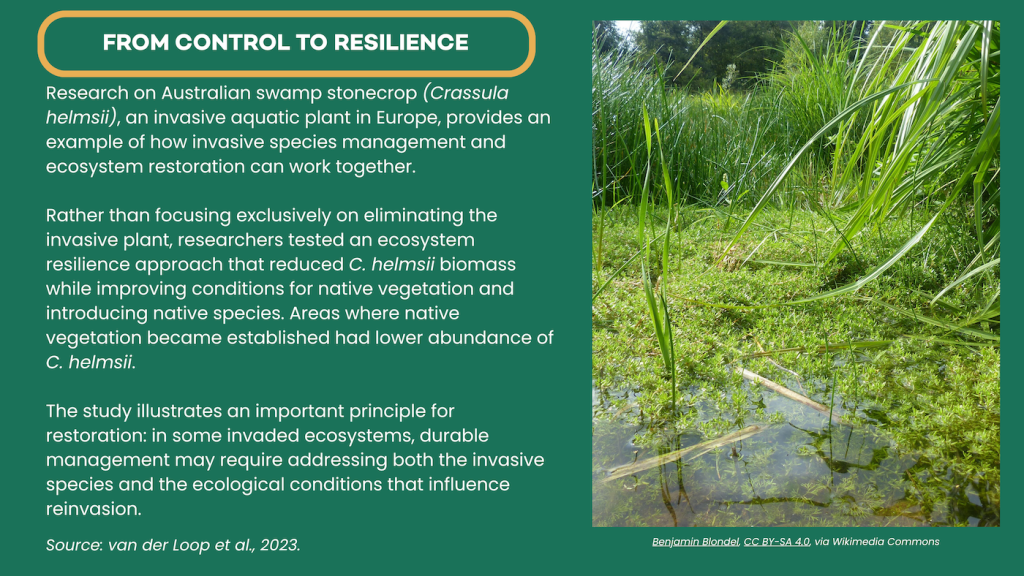
van der Loop, J.M.M., van Kleef, H.H., van Veenhuisen, L.S., Lamers, L.L., and Leuven, R.S.E.W. 2023. The ecosystem resilience approach to control the invasive alien species Australian swamp stonecrop (Crassula helmsii). Restoration Ecology 31: e13844.
https://doi.org/10.1111/rec.13844
U.S. Fish and Wildlife Service. The Importance of Prevention & Early Detection Rapid Response.
https://www.fws.gov/story/2025-08/importance-prevention-early-detection-rapid-response
U.S. Fish and Wildlife Service. Invasion Curve. Public Domain.
https://www.fws.gov/media/invasion-curve
NAISMA. Know Your Invasives.
https://naisma.org/programs/know-your-invasives/