NAISMA made another appearance in Washington, DC this June with a round of one-on-one meetings with Congressional staffers and federal agency leaders. Executive Director Christie Trifone Millhouse, Board President Chris Dionigi, and Government Relations Manager Mara Rice connected with House appropriators representing Midwestern and Pacific districts as well as members of the Department of Homeland Security (DHS), Department of Agriculture (USDA), and Department of Interior (DOI) to discuss emerging threats from pests such as coconut rhinoceros beetle and New World Screwworm, and pending administrative changes to federal activities.
The team articulated the need for appropriations that allocate full funding to key regulatory agencies, and legislation that authorizes pilot programs for innovative technologies, prioritizes prevention, and integrates approaches across state, local, tribal, and territorial (SLTT) governments. Staffers expressed concerns over biosecurity in American agriculture and waterway safety, with some attention called to the need to manage specific species, for which NAISMA has offered to prioritize and secure expertise as legislators continue to grapple with these and related concerns.
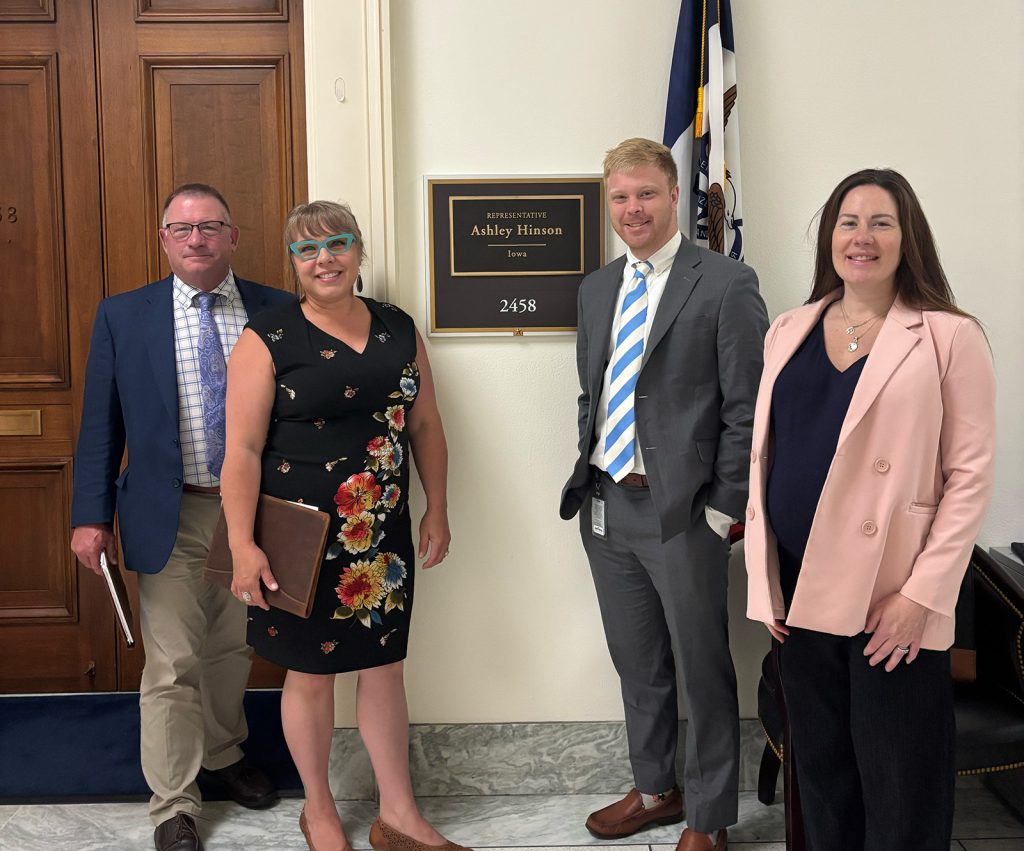
Meetings with federal agencies centered on general introductions and discussions on possible opportunities for future collaboration. A particular item of note was the increasing need to manage invasives at the U.S.-Mexico border, with plans to connect NAISMA with Customs and Border Patrol (CBP) to initiate designs for a shared monitoring platform between the agency and invasive species professionals. There was also extensive deliberation around renewed attention to Pacific Island issues with the DOI Office of Insular Affairs, with interest in coordinating shared meetings between NAISMA, DOI, and key Congressional offices.
The meetings represented advancement of invasive species issues in legislative priorities and elevation of NAISMA’s authority in the conservation space. NAISMA looks forward to continued collaboration and open communication with these and related federal opportunities.